

What Is a Quartz Watch? How It Works & Pros
A quartz watch is a timepiece that uses an electronic circuit and a vibrating quartz crystal to keep time. Most traditional quartz watches run on a battery, which supplies the energy needed to regulate the movement and operate the display. They are popular because they are generally accurate, easy to maintain, and convenient for everyday wear.
But what does quartz mean on a watch? How does a quartz movement work, and is a quartz watch better than an automatic one?
Understanding the answers can help you choose a watch that suits your lifestyle, budget, and preferences. This guide explains how quartz watches work, their advantages and disadvantages, their battery requirements, and the key differences between quartz, automatic, and mechanical watches.
What Is a Quartz Watch?
A quartz watch is a watch that uses a quartz crystal as part of its timekeeping system. The crystal vibrates at a highly stable frequency when an electrical current passes through it. An electronic circuit measures these vibrations and uses them to keep track of time.
In a typical battery-powered quartz watch, the circuit sends regular electrical signals to a small motor. The motor drives the gears that move the hands around the dial. Digital quartz watches use electronic displays instead of traditional hands.
The term quartz movement refers to the mechanism inside the watch that keeps time using this electronic system. When a watch description says “quartz movement,” it generally means the watch relies on a quartz crystal and electronic components rather than a purely mechanical balance wheel.
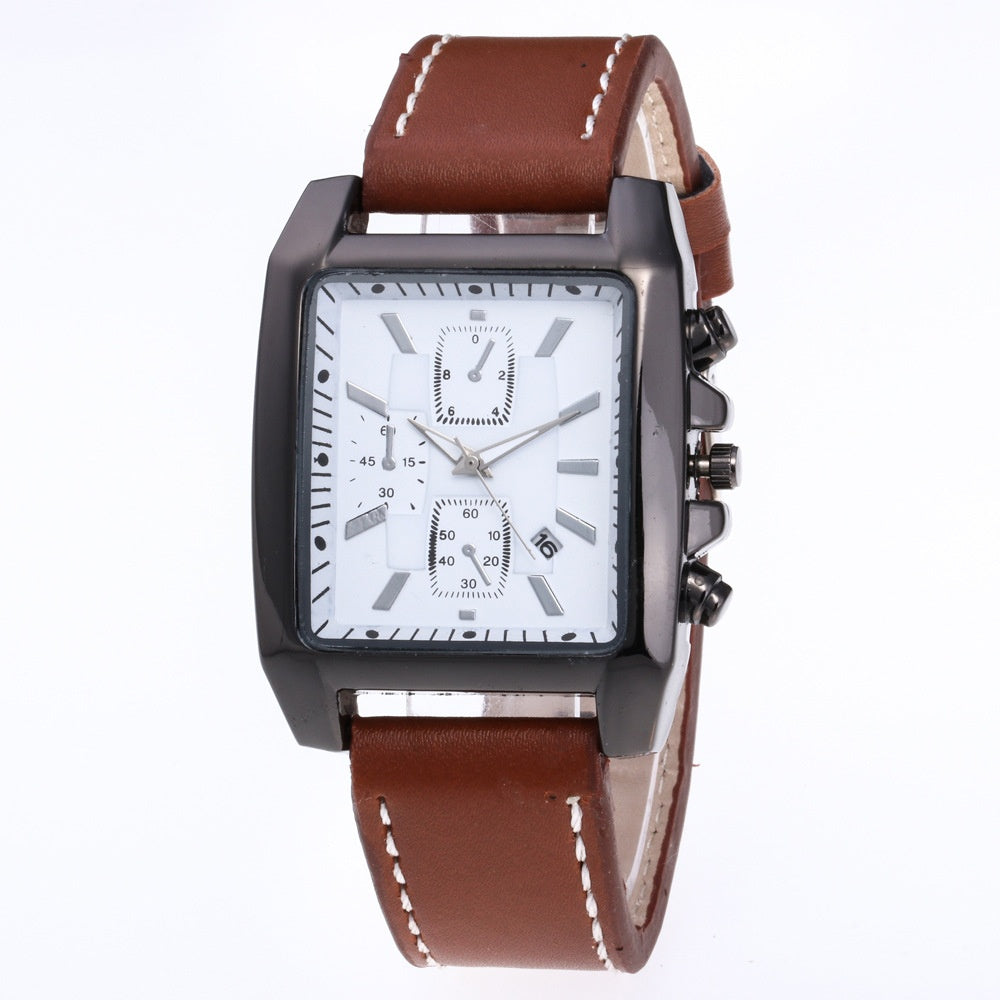
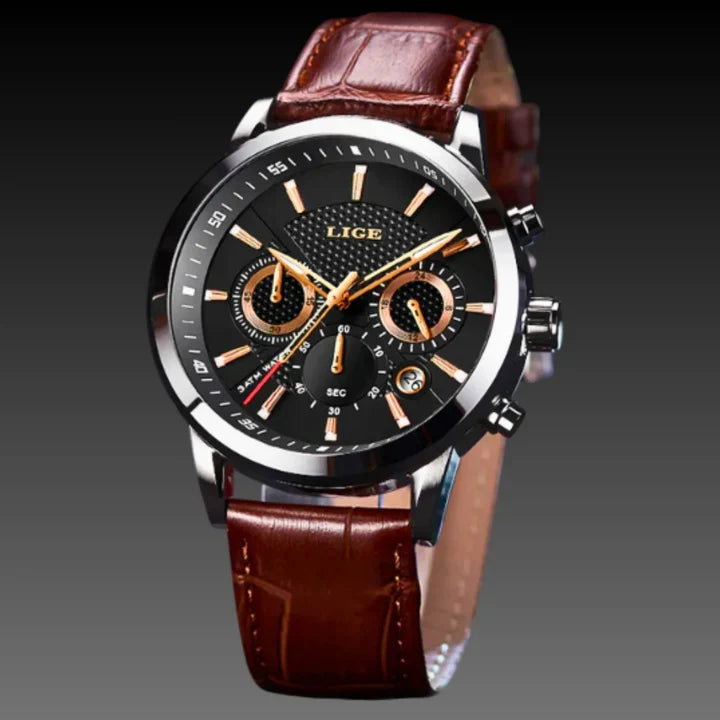
Quartz watches come in many designs, including minimalist dress watches, sports watches, chronographs, digital watches, and everyday wristwatches.
What Does Quartz Mean on a Watch?
The word “quartz” refers to the mineral used in the watch's timekeeping system. Quartz has a useful piezoelectric property: it can respond mechanically to an electrical signal and generate an electrical signal when mechanically stressed.
In a quartz watch, an electronic circuit makes use of this property to maintain a stable timing reference. The crystal does not power the entire watch by itself. The battery or another energy source supplies the power, while the quartz crystal helps regulate timekeeping.
This distinction is important because a quartz watch is not simply a watch containing a piece of quartz. It is a timekeeping system built around the crystal's predictable vibrations.
How Does a Quartz Watch Work?
A quartz watch movement combines an energy source, a quartz crystal, an electronic circuit, and a mechanism that displays the time. Each component performs a specific role.
1. The Battery Supplies Energy
In a standard battery-powered quartz watch, a small battery provides electrical energy to the circuit and other components.
The battery is designed to operate for an extended period, so you generally do not need to wind the watch or wear it every day to keep it running. When the battery becomes depleted, the watch may stop or show signs that the battery needs replacing.
Solar quartz watches work differently. They convert light into electrical energy and typically store it in a rechargeable cell. They still use a quartz crystal to regulate time, but they do not rely on frequent conventional battery replacement in the same way as ordinary battery-powered models.
2. The Quartz Crystal Vibrates
The electronic circuit applies an electrical signal to a small quartz crystal. The crystal vibrates at a precise frequency, commonly 32,768 times per second in many standard quartz wristwatches.
This frequency is useful because electronic circuits can divide it down to produce one pulse per second.
The crystal's stable vibration is one of the main reasons quartz watches can keep time accurately. However, real-world performance still depends on the quality of the movement, temperature, component design, and condition of the watch.
3. The Circuit Counts the Vibrations
An integrated circuit processes the crystal's electrical signal and divides the high-frequency oscillations into a slower timing signal.
In a typical analog quartz watch, the circuit generates a pulse approximately once per second. These pulses control the motor that advances the hands.
This electronic timekeeping process is what separates a quartz movement from a traditional mechanical movement, which relies on a system of gears, springs, and a mechanical regulator.
4. The Motor and Gears Move the Hands
In many analog quartz watches, an electromagnetic stepping motor converts the circuit's electrical pulses into small mechanical movements.
The motor turns a gear train, which moves the second, minute, and hour hands across the dial. The second hand on many conventional quartz watches advances in distinct one-second steps.
Digital quartz watches use the timing signal to update an electronic display instead. Both types use quartz-based timekeeping, even though their displays look different.
In simple terms: the energy source powers the watch, the quartz crystal provides a stable timing signal, the circuit processes that signal, and the display shows the time.
Do Quartz Watches Need Batteries?
Most conventional quartz watches need a battery. The battery supplies the electrical energy that allows the crystal oscillator and electronic circuit to function.
However, not every quartz watch relies on a replaceable conventional battery.
- Standard quartz watches: Usually use a replaceable watch battery.
- Solar quartz watches: Use light to generate electricity and store energy in a rechargeable cell.
- Digital quartz watches: Usually use a battery or another specified power source, depending on the model.
- Mecha-quartz watches: Combine quartz timekeeping with mechanical components for particular functions, often chronograph operation.
A solar watch may still contain a rechargeable cell that eventually requires servicing or replacement. Solar power does not mean the watch can operate indefinitely without maintenance.
How Long Do Quartz Watch Batteries Last?
Battery life varies by movement, battery capacity, display, and watch functions. A simple quartz watch may run for several years on one battery, while watches with chronographs, alarms, illumination, or other power-intensive features may use energy more quickly.
The manufacturer's specifications are the best guide for a particular model.
If your quartz watch stops, first consider whether the battery needs replacing. However, a depleted battery is not the only possible cause. A damaged movement, poor battery contact, or internal fault may also stop the watch.
Use a qualified watch technician when the cause is unclear, especially if the watch is water-resistant or requires specialist opening and resealing.
How Accurate Are Quartz Watches?
Quartz watches are generally more accurate than many traditional mechanical and automatic watches at everyday price points. Their electronic circuits use the crystal's stable frequency to regulate time, reducing the variation associated with purely mechanical timekeeping.
The exact accuracy depends on the movement and its specifications. Temperature changes, ageing components, battery condition, and physical damage can affect performance.
It is better to check the manufacturer's stated accuracy than assume every quartz watch performs identically.
Why Is Quartz Used in Watches?
Quartz is useful in watchmaking because it provides a stable frequency that electronic circuits can measure consistently. This helps a quartz movement keep time without needing the intricate mechanical regulation system found in traditional mechanical watches.
Quartz movements can also be compact, practical, and relatively economical to manufacture. These characteristics make them suitable for many types of watches, from simple everyday designs to feature-rich sports and chronograph models.
Pros and Cons of Quartz Watches
Quartz watches suit many people because they combine dependable timekeeping with straightforward daily use. However, they are not automatically the best choice for every watch buyer.
Advantages of Quartz Watches
1. Generally accurate timekeeping
Quartz movements are known for keeping time accurately. Many everyday quartz models need fewer time corrections than comparable mechanical watches.
2. Convenient daily use
Most standard quartz watches do not need manual winding. You can leave one unworn for a period and generally expect it to keep running until its battery runs down.
3. Simple routine maintenance
A conventional quartz watch usually needs periodic battery replacement and occasional servicing as recommended by its manufacturer. The exact requirements depend on its construction and features.
4. Options for different budgets
Quartz movements are used in a wide range of watches. Buyers can find simple, affordable designs as well as premium quartz timepieces with advanced functions and finishing.
5. Wide choice of styles
Quartz technology is used in analog, digital, sports, dress, and chronograph watches. The movement type does not determine whether a watch looks formal, casual, or sporty.
Disadvantages of Quartz Watches
1. Battery or power-source maintenance
Most conventional quartz watches eventually need a battery replacement. Solar models need sufficient light exposure and may eventually require attention to their rechargeable energy-storage cell.
2. Different ownership experience
Some watch enthusiasts enjoy winding a mechanical watch and observing the mechanics at work. A standard quartz movement generally offers a different experience, focused more on convenience than mechanical interaction.
3. Repair considerations
Depending on the model, replacing or repairing an electronic movement may be less practical than servicing a particular mechanical movement. Repairability varies by manufacturer, parts availability, and watch design.
4. Less traditional mechanical complexity
Collectors who value intricate gears, springs, and mechanical craftsmanship may prefer a mechanical or automatic watch. This is a matter of preference rather than proof that one technology is universally better.
Quartz vs Automatic vs Mechanical Watches
Quartz, automatic, and manual mechanical watches all measure time, but they use different systems to do it.
A quartz watch uses a crystal and an electronic circuit. A mechanical watch uses stored energy in a mainspring and a mechanical regulating system. An automatic watch is a type of mechanical watch that winds its mainspring through the motion of the wearer's wrist.
| Feature | Quartz | Automatic | Manual mechanical |
|---|---|---|---|
| Timekeeping system | Quartz crystal and electronic circuit | Mechanical regulator and gear train | Mechanical regulator and gear train |
| Main energy source | Usually a battery; solar models use light and a rechargeable cell | Mainspring wound by wrist motion or manually | Mainspring wound by hand |
| Regular winding | Usually not required | Often winds while worn | Required |
| Typical accuracy | Generally high for everyday use | Varies by movement and condition | Varies by movement and condition |
| Routine upkeep | Battery or power-source care; servicing as needed | Periodic servicing as recommended | Periodic servicing as recommended |
| Best suited to | Convenience and accurate daily timekeeping | Mechanical appeal with automatic winding | People who enjoy traditional winding |
Is Quartz or Automatic Better?
Neither is universally better. The right choice depends on what matters most to you.
Choose a quartz watch if you want convenient timekeeping, generally strong everyday accuracy, and minimal interaction with the movement.
Choose an automatic watch if you appreciate mechanical engineering and prefer a movement that winds itself through wrist movement while you wear it. An automatic watch may stop after being left unworn long enough for its power reserve to run out.
Choose a manual mechanical watch if you enjoy winding your watch and appreciate traditional mechanical operation.
One important point: automatic watches do not normally need a battery to run their mechanical movement. Their mainspring stores the energy. A watch with additional electronic features may have different requirements, so check the specific model.
For a broader introduction to these mechanisms, read our guide to watch movement types explained for beginners. Replace this placeholder with the published article URL before publishing.
Different Types of Quartz Watches
Quartz describes the timekeeping technology, not a single case design or display style. Several kinds of watches use quartz movements.
Analog Quartz Watches
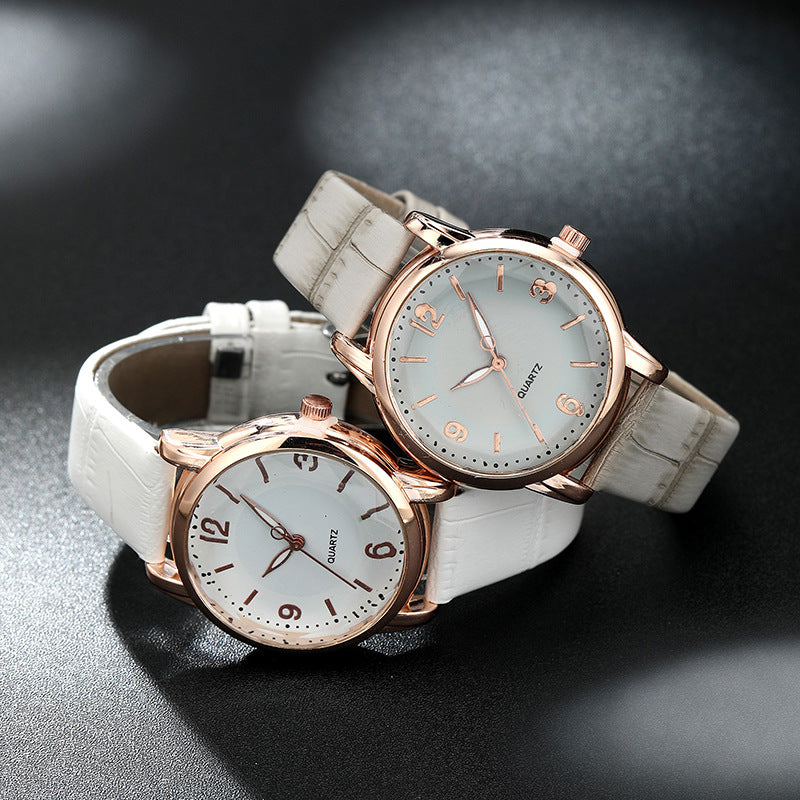
Analog quartz watches display the time with hour, minute, and usually second hands. They are available in minimalist, dress, casual, and sports designs.
Digital Quartz Watches
Digital quartz watches display the time using digits on an electronic screen. Depending on the model, they may also include alarms, timers, calendars, backlighting, or other functions.
Solar Quartz Watches
Solar quartz watches convert light into electricity and store that energy in a rechargeable cell. They still use a quartz crystal for timekeeping, but light helps supply their power.
Mecha-Quartz Watches
Mecha-quartz movements combine quartz timekeeping with mechanical components for certain functions. Some chronograph models use this approach to provide a particular pusher feel or chronograph operation while retaining quartz-regulated timekeeping.
Features differ between movements, so the term alone does not establish a watch's exact specifications.
How Long Does a Quartz Watch Last?
A quartz watch can last for many years when it is properly cared for. Its overall lifespan depends on movement quality, construction, exposure to moisture or impact, availability of replacement parts, and whether it receives appropriate maintenance.
It is useful to distinguish between three things:
-
Battery life: How long the power source operates before it needs replacing or recharging.
-
Movement lifespan: How long the timekeeping mechanism remains functional before repair or replacement is needed.
-
Watch lifespan: How long the complete timepiece remains usable, including its case, crystal, crown, seals, strap, and movement.
A battery running out does not mean the watch itself has reached the end of its life. Likewise, a watch may need new seals, a strap, or other repairs while its movement is still functioning correctly.
To help your watch last longer, follow the manufacturer's care instructions, avoid impacts, keep the crown properly secured where applicable, and respect the stated water-resistance rating. Water resistance can deteriorate over time, so do not assume an older watch remains water-resistant without appropriate checks.
Are Quartz Watches Good for Everyday Use?
Yes. Quartz watches are often a practical choice for everyday wear because they are generally accurate, easy to operate, and available in many styles and price ranges.
A minimalist quartz watch can suit office wear or formal occasions. A casual analog or digital model may work better for everyday activities, while a feature-rich quartz sports watch may be useful when you need functions such as a timer or chronograph.
Before buying, consider the watch's actual specifications rather than choosing by movement type alone. Case size, comfort, strap material, water resistance, readability, warranty, and the availability of service all affect how well a watch suits your routine.
If you are comparing styles, explore the GiftLuxWatch men's collection and check each product page for its movement and other verified specifications.
Frequently Asked Questions
What does quartz movement mean?
Quartz movement means the watch uses a vibrating quartz crystal and an electronic circuit to regulate time. In a typical analog model, electrical pulses drive a motor that moves the hands.
Do quartz watches have batteries?
Most standard quartz watches use a replaceable battery. Solar quartz watches use light to generate electricity and usually store it in a rechargeable cell.
How do quartz watches work?
A power source supplies energy to an electronic circuit, which uses a quartz crystal's stable vibrations to measure time. The circuit then drives the hands through a motor or updates a digital display.
Are quartz watches better than automatic watches?
Quartz watches generally offer convenient, accurate timekeeping with little day-to-day interaction. Automatic watches appeal to people who prefer traditional mechanical movements and self-winding operation. The better choice depends on your priorities.
How accurate are quartz watches?
Quartz watches are generally accurate for everyday use, but actual performance varies by movement and conditions. Check the manufacturer's accuracy specification for the model you are considering.
What is the difference between quartz and mechanical watches?
A quartz watch uses a crystal and electronic circuit to regulate time. A mechanical watch relies on a mainspring, gears, and a mechanical regulator. Automatic watches are mechanical watches that wind through wrist movement.
Why is quartz used in watches?
Quartz provides a stable vibration frequency that an electronic circuit can use as a timekeeping reference. This makes it possible to produce practical, accurate watch movements.
Can a quartz watch last a lifetime?
Some quartz watches remain usable for decades, but lifetime depends on construction, maintenance, repairability, and parts availability. A battery replacement alone does not determine the watch's overall lifespan.
Final Thoughts
A quartz watch uses a vibrating quartz crystal and electronic circuitry to keep time. Most conventional models run on batteries, while solar quartz watches use light as their energy source. Their combination of accuracy, convenience, and varied designs makes quartz a practical option for many watch buyers.
When choosing a watch, think about how you plan to wear it, how much maintenance you prefer, and whether you value electronic convenience or traditional mechanical craftsmanship. Comparing those factors will help you find a timepiece that fits your needs.
Explore GiftLuxWatch's watch collections to compare available styles, and review each product's specifications before choosing the right watch for you.
Watch Movement Types Explained for Beginners: Quartz, Automatic & More
How to Wind an Automatic Watch: A Step-by-Step Guide
Related Posts

What Is a Tourbillon Watch? How It Works & Why It Costs More
Swiss vs Japanese Watch Movements: Which Is Better?

Deployant Clasp: What It Is and How It Works

How to Adjust a Watch Band: Step-by-Step Guide

5 ATM Water Resistance: What It Means for Your Watch

Which Wrist to Wear a Watch On? Left or Right?
How to Clean a Stainless Steel Watch Safely
