

Watch Movement Types Explained for Beginners: Quartz, Automatic & More
When choosing a watch, it is easy to focus on the dial, case, strap and overall design. But another detail affects how a watch performs every day: its movement.
The movement is the mechanism inside a watch that keeps time and drives its hands or display. Depending on the type, it may run on a battery, a wound spring, light or energy generated by wrist movement. These differences affect accuracy, maintenance, convenience and the experience of wearing the watch.
If you are comparing quartz and automatic watches, wondering what a mechanical movement does, or trying to understand terms such as Japanese movement and Swiss movement, this guide explains the essentials in straightforward language.
By the end, you will understand the main watch movement types, how they work and which option may suit your lifestyle.
What Is a Watch Movement?
A watch movement is the internal mechanism responsible for keeping time and operating the watch's functions. It is sometimes called the watch's calibre.
Think of the movement as the engine of a watch. The case protects it, the dial displays the time, and the hands show the hours, minutes and sometimes seconds. The movement makes these functions possible.
Not all movements work in the same way. A quartz watch uses an electronic circuit and a vibrating quartz crystal to regulate time. A mechanical watch relies on stored energy from a wound mainspring and a system of gears and regulating components.
The main distinction is how the watch gets its energy and how it measures the passage of time.
A watch movement can also control additional functions, such as a date display, chronograph, second time zone or power-reserve indicator. These features depend on the particular movement and its design.
How Does a Watch Work?
Although different watches use different technologies, every traditional watch needs a way to obtain energy, regulate time and display the result.
1. The movement receives energy
The energy source depends on the movement type.
- Quartz: Usually uses a replaceable battery.
- Manual mechanical: Stores energy in a mainspring that you wind using the crown.
- Automatic mechanical: Uses a mainspring that is wound through a rotor responding to wrist movement. Many automatic movements can also be wound manually.
- Solar quartz: Uses light to generate electricity and charge an internal rechargeable cell.
- Kinetic: Converts movement into electrical energy that powers a quartz timekeeping system.
2. The movement regulates time
The watch needs a consistent reference to measure time accurately.
In a quartz movement, an electronic circuit works with a vibrating quartz crystal. In a mechanical movement, components such as the balance wheel, hairspring and escapement regulate the release of energy.
These systems perform the same basic job but use different methods.
3. The movement displays the time
In an analogue watch, gears transfer energy to the hands so they move across the dial. A digital watch displays the time electronically.
Additional mechanisms may operate the date window, chronograph counters or other functions.
Understanding these three steps makes it easier to compare watch movement types without getting lost in technical terminology.
The Main Types of Watch Movements
The most useful starting point is to understand the difference between quartz and mechanical movements. Manual and automatic watches belong to the mechanical category, while solar and kinetic watches are variations of quartz-based timekeeping.
1. Quartz Movement
A quartz movement is an electronic watch mechanism that usually runs on a battery. The battery supplies electricity to a quartz crystal, which vibrates at a stable frequency. An electronic circuit uses those vibrations to regulate time, and a motor typically drives the hands in an analogue watch.
This is why many quartz watches have a seconds hand that advances in distinct one-second steps.
Quartz movements became popular because they offer strong everyday accuracy, straightforward operation and relatively low maintenance.

Advantages of quartz watches
- Generally more accurate than ordinary mechanical watches.
- Usually require little day-to-day attention.
- Do not need regular winding.
- Often available at accessible prices.
- Convenient for daily wear, work and travel.
Things to consider
The battery eventually needs replacement in most standard quartz watches. Some models use rechargeable cells or have additional functions that affect servicing requirements. A quartz watch can also require repairs if its circuit, motor or other components fail.
Who should choose quartz?
Quartz is a practical choice if you want a watch that is easy to use, keeps reliable time and does not need winding. It suits people who prefer convenience over the hands-on experience of owning a mechanical watch.
Read our dedicated guide to what a quartz watch is for a closer look at its working principle, accuracy and advantages.
2. Manual Mechanical Movement
A manual mechanical watch stores energy in a tightly wound mainspring. You turn the crown to wind the spring, and as it gradually unwinds, it supplies energy to the gear train.
The escapement releases that energy in controlled intervals while the balance wheel and hairspring regulate the movement. Together, these components keep the watch running at a consistent rate.
Unlike a standard battery-powered quartz watch, a manual mechanical watch does not need an electrical battery to keep time.
Advantages of manual mechanical watches
- Offers a traditional watchmaking experience.
- Does not require routine battery replacement.
- Can feature intricate mechanical craftsmanship.
- Some designs can be relatively slim because they do not need an automatic winding rotor.
Things to consider
Manual watches need regular winding according to their power reserve and manufacturer's instructions. Their accuracy can vary with the movement's condition, position, temperature and other factors. They may also require periodic professional servicing.
Who should choose a manual mechanical watch?
Choose this type if you enjoy the ritual of winding a watch and appreciate the engineering inside it. It can also appeal to people who prefer traditional watchmaking and do not mind giving their watch a little attention.
3. Automatic Mechanical Movement
An automatic watch is a type of mechanical watch that winds itself through the motion of a rotor inside the case. As your wrist moves, the rotor turns and transfers energy to the mainspring through the winding mechanism.
The mainspring then powers the watch in much the same way as it does in a manual mechanical movement.
An automatic watch does not normally need a battery, but it is not powered directly by wrist movement every second. Wrist movement helps wind the spring, which stores energy for later use.
Many automatic movements also support manual winding through the crown. Whether and how to wind a particular model should be checked in its instructions.
Advantages of automatic watches
- No routine battery replacement.
- Offers the mechanical construction appreciated by watch enthusiasts.
- Often features a sweeping-looking seconds hand.
- Some watches have transparent casebacks that reveal parts of the movement.
- Can provide a satisfying blend of engineering and everyday style.
Things to consider
An automatic watch may stop if it is left unworn long enough for its stored energy to run out. Its accuracy is usually less precise than that of a typical quartz watch, and professional servicing may be needed over time.
A watch winder can keep some automatic watches running while they are not being worn, but it is optional and should be suitable for the specific movement.
Who should choose an automatic watch?
An automatic watch is a good option if you appreciate mechanical design, prefer not to rely on a disposable battery and enjoy wearing a watch regularly. Skeleton and open-heart designs can make the movement especially interesting to look at.
Explore GiftLuxWatch's men's watch collection to compare available styles, and check each product's specifications before choosing a movement.

4. Solar Quartz Movement
A solar watch is generally a type of quartz watch. Instead of relying only on a conventional replaceable battery, it uses a light-sensitive cell to convert light into electricity. The electricity charges an internal rechargeable cell, which powers the quartz movement.
The light source may be sunlight or suitable artificial light, depending on the watch. The amount of light needed and the operating time after a full charge vary by model.
Advantages of solar watches
- Combines quartz timekeeping with light-based charging.
- Can reduce the need for routine battery replacements.
- Often convenient for everyday use.
- Does not need winding like a mechanical watch.
Things to consider
Solar watches still have an internal rechargeable cell, and that cell can eventually lose capacity. A watch may also stop if its charge becomes too low. Follow the manufacturer's charging and storage instructions.
Who should choose a solar watch?
Solar quartz is worth considering if you want the convenience of quartz but prefer not to replace a conventional battery as often.

5. Kinetic and Hybrid Movements
Kinetic watches use movement from the wearer to generate electricity. A rotor turns a generator, and the generated energy is stored in a rechargeable cell or capacitor, depending on the design. The stored energy then powers a quartz timekeeping system.
This is an important distinction: a kinetic watch is not the same as a conventional automatic mechanical watch. Both can use a rotor, but the rotor serves a different purpose.
Hybrid movements combine features of different technologies. For example, a mecha-quartz chronograph uses quartz timekeeping alongside a mechanical-style chronograph mechanism. Some advanced systems combine a mechanical power source with electronic regulation.
The exact design varies, so the term hybrid should not be taken to mean that all hybrid watches work the same way.
Who should consider these movements?
Kinetic and hybrid watches may appeal to people who want a particular combination of convenience, engineering or chronograph operation. Check the product details carefully, since charging methods and maintenance requirements differ between models.
Quartz vs Automatic vs Mechanical: What Is the Difference?
One of the most common sources of confusion is the difference between automatic and mechanical watches.
The key point is that automatic watches are mechanical watches. The term mechanical describes how the movement stores and releases energy. Manual and automatic describe how that mainspring is wound.
Quartz works differently because it uses an electronic timekeeping system regulated by a quartz crystal.
| Feature | Quartz | Manual mechanical | Automatic mechanical |
|---|---|---|---|
| Main energy source | Usually a battery | Wound mainspring | Wound mainspring |
| How it is powered | Battery supplies electricity | Crown winds the spring | Wrist movement winds the spring; many also allow crown winding |
| Typical accuracy | Generally very high | Varies by movement | Varies by movement |
| Routine winding | No | Yes | Usually not if worn enough |
| Battery replacement | Usually required for standard battery models | No | No |
| Maintenance | Generally low, but repairs may be needed | Periodic servicing | Periodic servicing |
| Best suited to | Convenience and accurate timekeeping | Traditional watchmaking and winding rituals | Mechanical craftsmanship and regular wear |
Which movement is more accurate?
Quartz watches are generally more accurate than ordinary mechanical watches. A typical quartz watch may vary by seconds per month, while a mechanical watch's daily rate can vary by several seconds or more.
These are broad comparisons, not specifications for every watch. High-accuracy quartz movements and specially regulated mechanical movements can perform differently from standard examples. Check the manufacturer's stated accuracy when precision is especially important.
Which movement lasts longer?
There is no single answer for every model. A well-maintained mechanical watch can operate for many years, but it contains components that may need cleaning, lubrication, adjustment or replacement. Quartz watches have fewer moving parts in their timekeeping system, but their electronics, motor, battery contacts and other components can also fail.
The lifespan of a watch depends on build quality, usage, environmental exposure, maintenance and the availability of parts. Movement type alone does not determine how long the entire watch will last.
Which movement is easier to maintain?
Quartz watches are usually easier to live with because they do not require winding and often need only a battery replacement at intervals specified by the manufacturer. Solar quartz models may need less frequent charging-related attention.
Mechanical watches need more attention to winding and timekeeping, and they may require professional servicing. However, maintenance needs vary significantly between movements and manufacturers.
What Do Japanese and Swiss Watch Movements Mean?
You may see terms such as Japanese movement, Japanese quartz movement, Swiss movement and Swiss quartz movement in product descriptions.
These labels generally refer to the movement's origin, manufacturing or applicable industry requirements. They do not identify a separate fundamental timekeeping technology in the way quartz and mechanical do.
Japanese movement
A Japanese movement may be a quartz or mechanical movement associated with a Japanese manufacturer or production origin. Japanese companies produce a wide range of watch movements, from practical quartz mechanisms to automatic mechanical calibres.
The label alone does not tell you the exact accuracy, materials, service life or quality of a specific movement. The maker and calibre are more useful details when they are available.
Swiss movement
Swiss movement is also an origin-related term, not a synonym for automatic or mechanical. Switzerland has a long-established watchmaking industry that produces quartz and mechanical movements.
The phrase “Swiss movement” on its own does not necessarily establish that the complete watch was made in Switzerland. Applicable Swiss watch-origin rules depend on specific legal criteria and the claim being made.
Japanese vs Swiss movement: Which is better?
Neither label automatically makes a movement better. Both countries have manufacturers producing different types of movements for different price points and purposes.
When comparing watches, consider:
- The exact movement maker and calibre, if disclosed.
- Whether the movement is quartz, manual mechanical or automatic.
- The stated accuracy or performance specification.
- Warranty and repair support.
- The watch's overall construction and intended use.
A clearly identified movement with suitable specifications is more informative than relying on a country label alone.
Which Watch Movement Is Best for You?
The best movement depends on how you intend to use the watch. There is no single winner for every wearer.
Choose quartz if you want convenience
Quartz is ideal for someone who wants to pick up a watch, set the time when necessary and get on with the day. It generally offers excellent accuracy without regular winding.
It is a sensible choice for office wear, travel, daily errands and gifting when you are unsure whether the recipient enjoys watch maintenance.
Choose automatic if you appreciate mechanical craftsmanship
Automatic watches appeal to people who enjoy the movement inside the case as much as the watch's appearance. They can be especially attractive in skeleton designs, where parts of the mechanism are visible.
Keep in mind that an automatic watch can stop when left unworn long enough, and its time may need resetting before you wear it again.
Choose manual mechanical if you enjoy the winding ritual
A manual mechanical watch asks for regular interaction. Winding the crown becomes part of the ownership experience, which some people find satisfying.
If you prefer a watch that requires very little daily attention, quartz may be a better fit.
Choose solar quartz if you want light-powered convenience
Solar quartz is worth considering if you like quartz accuracy but want to reduce routine battery changes. It still needs suitable exposure to light and may eventually require rechargeable-cell service.
Consider the whole watch, not just its movement
Movement is important, but it is only one part of a good buying decision. Also consider the case size, dial readability, strap comfort, water-resistance rating, warranty and return policy.
A well-chosen watch should suit both your practical needs and your personal style.
How to Identify Your Watch Movement
If you already own a watch and do not know its movement type, there are several ways to investigate.
1. Check the product listing or manual. Look for terms such as quartz, automatic, mechanical, solar or kinetic. A model number can help you find the manufacturer's specifications.
2. Look for a battery reference. A product description that explicitly states battery-powered quartz is a clear indication. Do not open the case yourself just to check, since this can damage seals or components.
3. Observe the seconds hand carefully. Many conventional quartz watches move the seconds hand in one-second steps, while many mechanical watches have a more continuous-looking sweep. This is only a clue, not a definitive test: some quartz movements have smoother seconds-hand motion, and some watches have no seconds hand.
4. Check whether the watch requires winding. A manual mechanical watch is designed to be wound by hand. An automatic watch uses wrist motion to wind its mainspring. However, a stopped watch alone does not tell you which type it is.
5. Ask the manufacturer or seller. If the listing does not specify the movement, ask for the exact movement type and, if available, the manufacturer and calibre number.
Avoid assuming a watch is automatic simply because it has a thick case, a decorative dial or an exposed-looking design. Product specifications are the most reliable starting point.
Common Watch Movement Myths
Myth 1: Automatic watches are always better than quartz
Automatic watches offer mechanical craftsmanship, but quartz watches generally provide better accuracy and require less day-to-day attention. The better choice depends on your priorities.
Myth 2: Mechanical and automatic mean the same thing
Automatic is a category of mechanical movement. Manual mechanical watches are wound by hand, while automatic mechanical watches use a rotor to wind the mainspring through wrist movement.
Myth 3: A Japanese or Swiss movement tells you everything about quality
Country-related labels do not provide the full specification. The exact movement, its design, performance, manufacturing standards and support arrangements all matter.
Myth 4: An automatic watch never needs maintenance
Automatic watches do not normally need a battery, but their mechanical components can wear over time. Follow the manufacturer's servicing recommendations and have the watch checked if its performance changes noticeably.
Myth 5: Every quartz watch has a disposable battery
Many quartz watches use replaceable batteries, but solar and kinetic systems can use rechargeable cells or capacitors. Check the specific model rather than assuming every quartz movement has the same power source.
Frequently Asked Questions
What is a watch movement?
A watch movement is the internal mechanism that keeps time and operates the watch's hands or display. Common types include quartz, manual mechanical and automatic mechanical movements.
What is the difference between quartz and automatic watches?
A quartz watch usually uses a battery and an electronic circuit regulated by a vibrating quartz crystal. An automatic watch uses a mainspring and a rotor that winds the spring through wrist movement. Quartz is generally more accurate and lower maintenance, while automatic watches appeal to people who appreciate mechanical engineering.
Is a mechanical watch the same as an automatic watch?
Not exactly. Automatic watches are mechanical, but manual mechanical watches are wound by turning the crown. Automatic movements use wrist movement to wind the mainspring, although many can also be wound manually.
What is the best watch movement for everyday use?
Quartz is a strong everyday choice if you want accurate timekeeping and minimal maintenance. An automatic movement may suit you better if you enjoy mechanical watches and wear one regularly. The best option depends on your preferences and routine.
Are Japanese movements good?
Japanese manufacturers produce a wide range of quartz and mechanical movements. The country label alone does not determine performance, so check the specific movement, stated accuracy, warranty and service support.
Are Swiss movements always better than Japanese movements?
No. Swiss and Japanese manufacturers make movements for different uses and price levels. Compare the exact calibre and specifications instead of judging quality by country of origin alone.
How long does a watch movement last?
There is no universal lifespan. A movement's longevity depends on its construction, usage, environment and maintenance. Both quartz and mechanical movements can need repair or replacement, and mechanical watches may require periodic servicing.
Can you see the movement through a watch dial?
Some watches have skeleton or open-heart designs that reveal parts of the movement from the front. Others have transparent casebacks that show the movement from behind. Many watches conceal the mechanism completely, so the dial's appearance alone does not confirm the movement type.
Final Thoughts
Understanding watch movement types helps you choose a timepiece that suits your routine, expectations and personal style. Quartz is a practical option for accuracy and convenience. Manual mechanical watches offer the traditional experience of winding a spring, while automatic watches combine mechanical construction with self-winding functionality. Solar and kinetic watches add other ways to power quartz timekeeping.
Before buying, check the actual movement specifications rather than relying on appearance or broad labels such as Japanese, Swiss or automatic. Consider accuracy, winding, maintenance, warranty and how often you plan to wear the watch.
Ready to find a style that suits you? Explore the GiftLuxWatch collection and compare available designs. Check each product page for its movement type and specifications so you can choose with confidence.
How to Measure Your Wrist for a Watch: Size Chart & Fit Guide
What Is a Quartz Watch? How It Works & Pros
Related Posts

What Is a Tourbillon Watch? How It Works & Why It Costs More
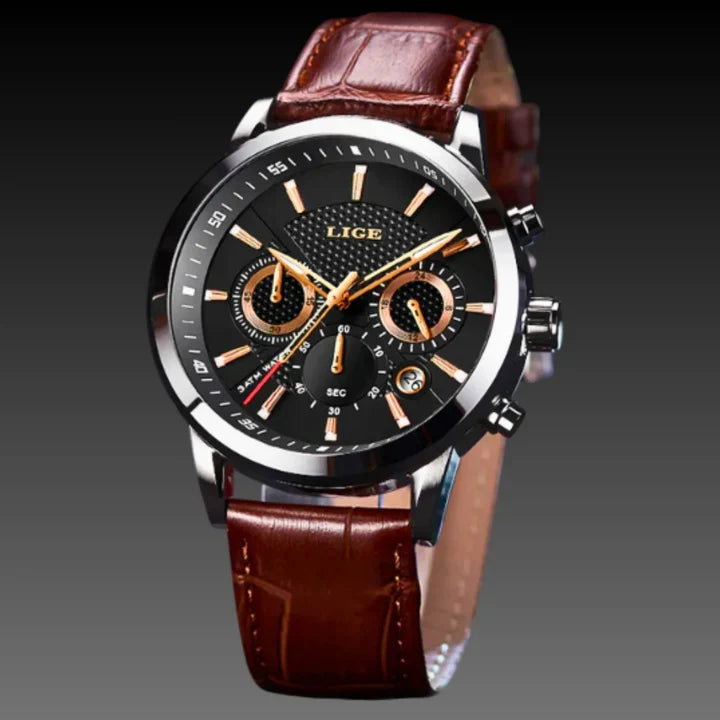
Swiss vs Japanese Watch Movements: Which Is Better?

Deployant Clasp: What It Is and How It Works

How to Adjust a Watch Band: Step-by-Step Guide

5 ATM Water Resistance: What It Means for Your Watch

Which Wrist to Wear a Watch On? Left or Right?
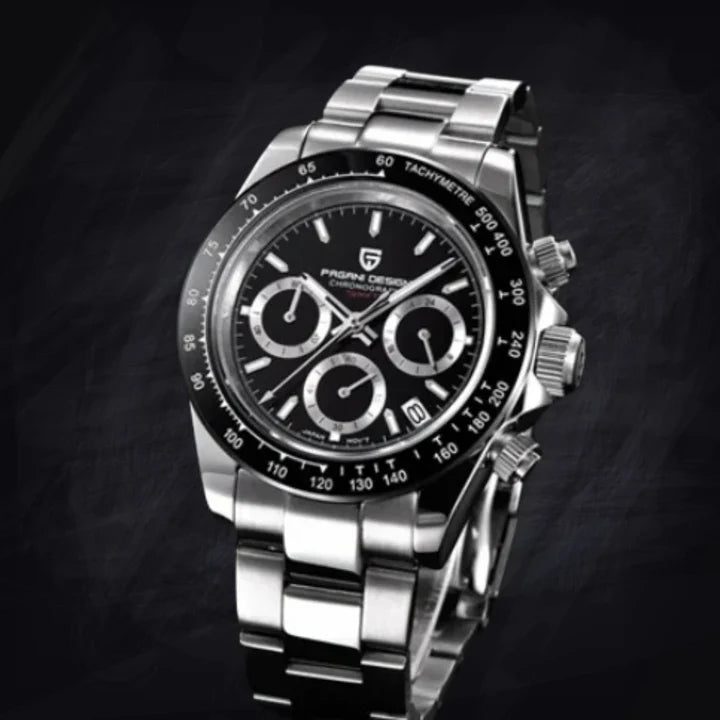
How to Clean a Stainless Steel Watch Safely
