

Which Wrist to Wear a Watch On? Left or Right?
If you are wondering which wrist to wear a watch on, the most common advice is to wear it on your non-dominant hand. For right-handed people, that usually means the left wrist. For left-handed people, the right wrist may feel more comfortable.
However, there is no strict rule that says a watch must be worn on one particular wrist. Comfort, daily activities, the design of the watch and personal preference all matter. The best choice is the wrist that lets you read the time easily without restricting your movement.
This guide explains which wrist to choose, whether men and women follow different rules, why left-wrist wearing became common and how to position a watch for a comfortable fit.
Which Wrist Should You Wear a Watch On?
Most people find it practical to wear a watch on the wrist opposite their dominant hand. This keeps the watch out of the way during many everyday activities and can make it less likely to get knocked against desks, tools or other objects.
Here is a simple guide:
| Your dominant hand | Common wrist choice | Why it may work well |
|---|---|---|
| Right hand | Left wrist | Keeps the watch away from your more active hand |
| Left hand | Right wrist | May reduce interference while writing or working |
| Either hand, depending on the task | Whichever feels comfortable | Your routine may matter more than the usual convention |
These are recommendations, not rules. Some right-handed people prefer wearing a watch on their right wrist, while some left-handed people wear theirs on the left.
If you already have a wrist that feels natural, there is usually no reason to change it simply because someone says a watch belongs on the other side.
Why Are Watches Traditionally Worn on the Left Wrist?
The left wrist became the conventional choice for many watch wearers partly because most people are right-handed. Wearing a watch on the opposite wrist keeps it away from the hand used for writing, handling tools and performing many other tasks.
Watch design also helped reinforce the convention. On many traditional wristwatches, the winding and setting crown sits on the right side of the case. When the watch is worn on the left wrist, the wearer can usually reach the crown with the right hand without removing the watch.
This arrangement is convenient for many right-handed people. It is not necessarily the most convenient setup for everyone.
As watches evolved from manually wound models to automatic and quartz designs, the original practical reasons became less important for some users. The left wrist remained a familiar choice, but personal comfort continued to influence how people wear their watches.
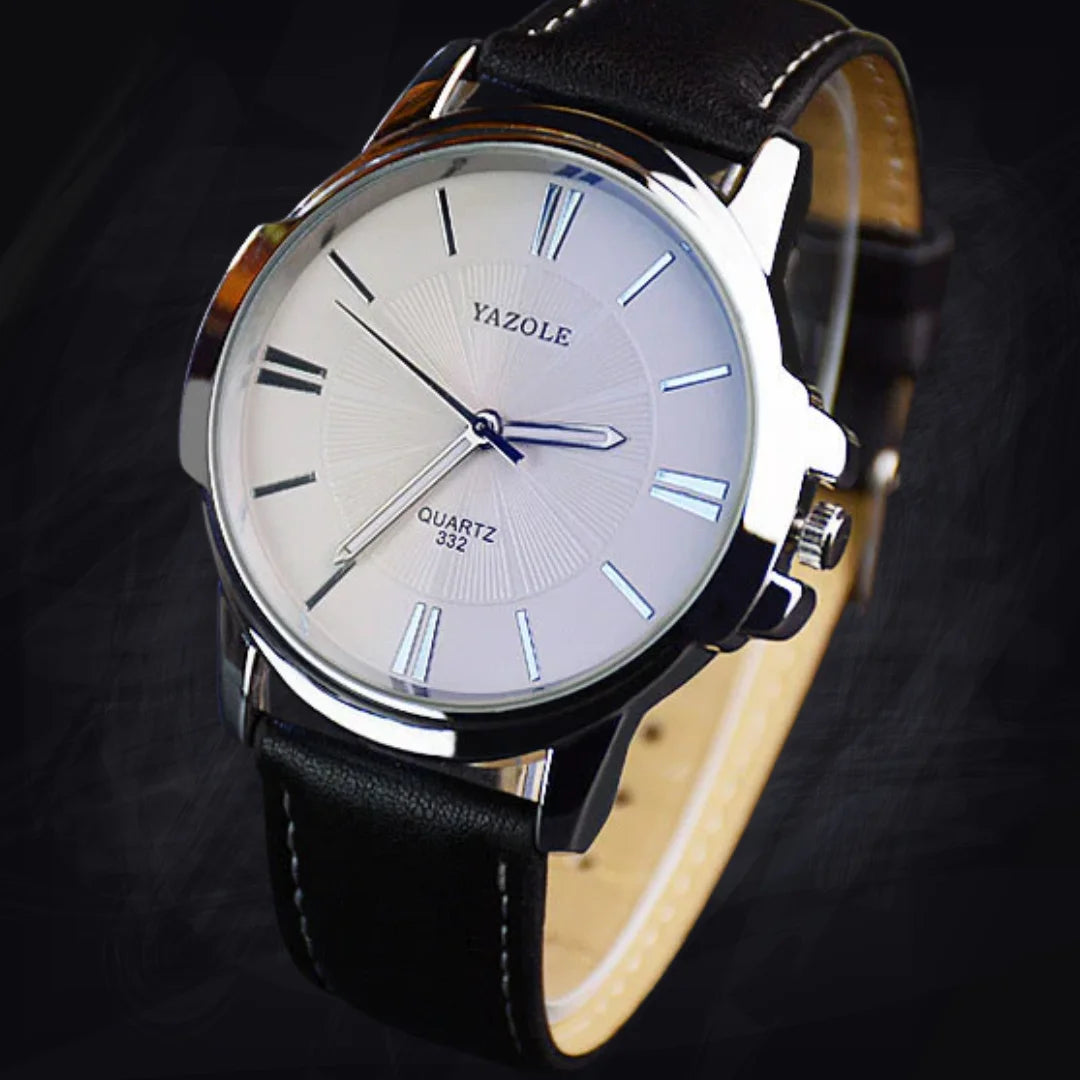
What Wrist Should a Man Wear a Watch On?
For men, the usual recommendation is the non-dominant wrist. A right-handed man will often find the left wrist practical, while a left-handed man may prefer the right.
There is no separate rule that every man must follow.
When choosing a wrist, consider how the watch feels during your usual routine. If you spend much of the day writing, typing, using tools or working with your hands, wearing it on the opposite wrist may help keep it out of the way.
The watch's design can matter too. A large case or a crown that presses against the back of your hand may become uncomfortable when you bend your wrist. If that happens, try the other wrist or consider a watch design that suits your wrist and activities better.
For formal occasions, the same principle applies. A watch can look appropriate with a business suit, a dress shirt or casual clothing on either wrist. A comfortable fit and a watch that suits the occasion matter more than following an inflexible convention.
Which Wrist Should a Woman Wear a Watch On?
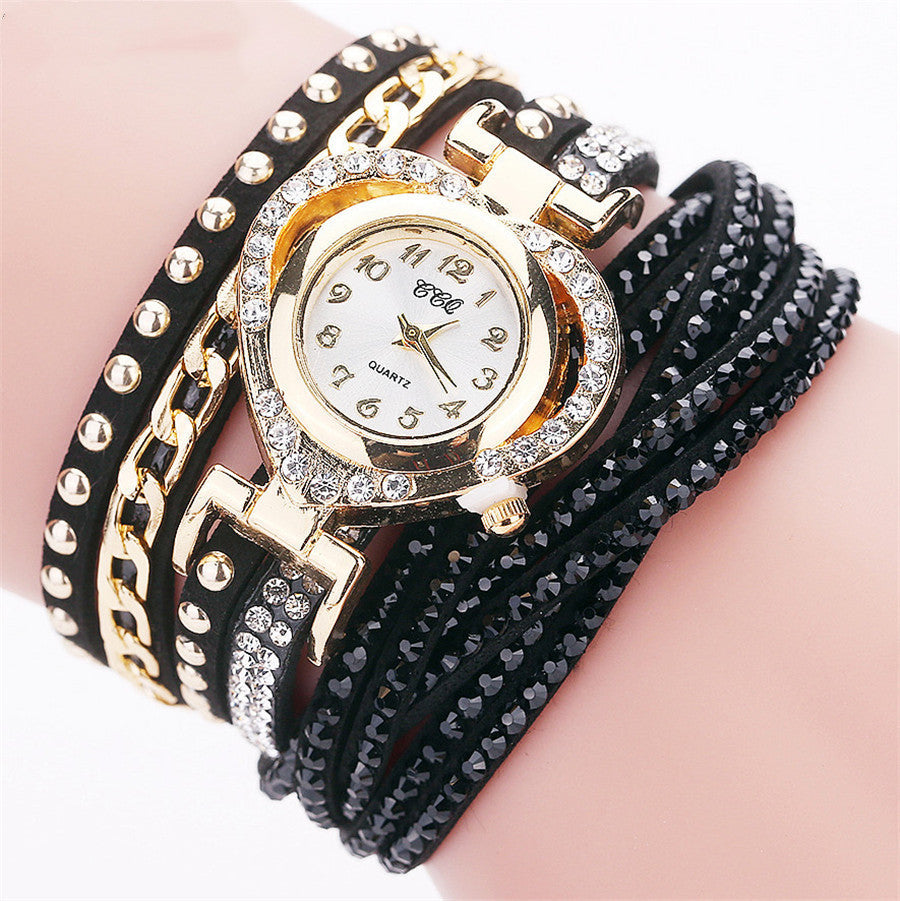
Women can wear a watch on either wrist. There is no universal rule requiring women to wear watches on the left or right hand.
Some women prefer the non-dominant wrist for everyday convenience. Others choose a wrist based on their bracelet, rings, clothing or preferred styling.
For example, if you regularly wear bracelets on your left wrist, placing your watch on the right may create a more comfortable arrangement. If you prefer wearing a watch alongside other jewellery, you can choose the combination that looks balanced and feels comfortable.
The size and shape of the watch can also influence the overall look. A slim watch may sit neatly beside bracelets, while a larger case may feel better worn alone.
Ultimately, the same practical advice applies to everyone: choose the wrist that suits your routine and personal style.
Is It Better to Wear a Watch on the Left or Right Hand?
Neither wrist is automatically better. The right choice depends on how you use your hands and how the watch fits.
Wearing a watch on the left wrist
The left wrist is a practical choice for many right-handed people. It follows the common convention and often makes it easy to adjust a standard watch using the right hand.
It may also keep the watch away from the hand you use most frequently for writing and other tasks.
However, a left wrist is not the best choice for everyone. If the watch restricts movement, presses against your hand or interferes with your work, another position may be more comfortable.
Wearing a watch on the right wrist
The right wrist can be a sensible choice for left-handed people, especially when the left hand is used for detailed or frequent tasks.
It can also be the better option for anyone who simply prefers how a watch looks or feels on that side.
One thing to check is the crown position. Many standard watches have a crown on the right side of the case, and wearing one on the right wrist may cause it to press against the back of the hand during certain movements.
If that becomes uncomfortable, try adjusting the position or consider a model designed for right-wrist wear. The watch should work with your movement rather than against it.
Should You Wear a Watch on Your Dominant or Non-Dominant Hand?
The non-dominant hand is a useful starting point because it often keeps the watch away from the hand doing most of the work.
There are three practical factors to consider.
Daily activities: If you frequently write by hand, operate equipment or perform manual work, the opposite wrist may keep the watch out of your way.
Ease of adjustment: Consider whether you can comfortably operate the crown and buttons with your free hand. The position of these controls varies by watch.
Comfort and protection: Your watch should not repeatedly strike a desk, press against your hand or interfere with wrist movement. Wearing it on the less active wrist may help, but your experience is the best guide.
You do not need to follow the non-dominant-hand convention if another arrangement works better for you.
Where Should a Watch Sit on Your Wrist?
Choosing the correct wrist is only part of wearing a watch comfortably. Its position and strap fit matter just as much.
1. Position the watch just above the wrist bone
A traditional wristwatch usually sits just above the wrist bone, toward the forearm. It should not slide down onto your hand whenever you lower your arm.
This position generally makes the watch easier to wear and helps prevent the case from restricting your wrist when you bend your hand.
Your wrist shape and watch design will influence the exact position, so use comfort and freedom of movement as your guide.
2. Keep the dial facing outward
For ordinary daily wear, the watch dial usually faces outward, away from the palm. This makes it easy to check the time by turning your wrist naturally.
The dial should sit in a position where you can read it without repeatedly twisting your arm into an awkward angle.
3. Adjust the strap for a secure fit
A watch should feel secure without squeezing your wrist.
If the strap is too tight, it may leave deep marks, pinch the skin or feel uncomfortable as your wrist moves. If it is too loose, the case may rotate around your wrist or slide down toward your hand.
A practical fit check is to see whether you can move your wrist normally and whether the watch stays in place during everyday movement. The exact amount of room will depend on the strap, case and shape of your wrist.
Metal bracelets may need links removed or added to achieve a comfortable fit. Leather and fabric straps can usually be adjusted through their buckle or fastening system.
4. Check the watch with your usual clothing
If you wear dress shirts, the watch should fit comfortably beneath the cuff without catching or creating excessive bulk.
A large or thick case may be less convenient under a fitted sleeve. A slimmer design may work better if you want the watch to sit discreetly beneath formal clothing.
Can You Wear a Watch on the Inside of Your Wrist?
Yes. Some people wear a watch with the dial facing the inside of the wrist rather than the back of the hand.
This is a personal choice, not a requirement. Some wearers prefer the position because it changes how they view the dial or how the watch feels during particular activities.
However, the inside of the wrist can expose the watch to contact with surfaces when you bend your hand or rest your forearm on a desk. Depending on the watch and your routine, this may increase the chance of scratches or discomfort.
If you prefer this position, check that the case and crown do not press into your skin and that the strap remains secure. There is no single correct orientation for every wearer.
Does Wearing a Watch on the Right Hand Mean Anything?
Not necessarily. Wearing a watch on the right wrist does not automatically indicate a particular personality, profession or social status.
Some people wear it there because they are left-handed. Others have always preferred that wrist, find it more comfortable or like how it looks.
The same applies to women and men. Wrist choice is generally a matter of habit, function and personal style rather than a universal social signal.
If someone asks why you wear your watch on the right, the simplest explanation may be that it feels better there.
How to Choose the Right Wrist for Your Watch
If you are buying a watch or changing the wrist you normally use, try this quick process:
- Start with your non-dominant wrist.
- Put the watch on and check whether the crown or case presses against your hand.
- Move your wrist through its normal range of motion.
- Check whether the strap slips, rotates or feels restrictive.
- Repeat the same checks on the other wrist.
- Choose the side that feels more natural throughout your day.
If both wrists feel equally comfortable, consider which side makes the watch easier to adjust and which arrangement you prefer visually.
You can also explore different case sizes and strap styles if the watch feels awkward on both wrists. A watch that fits your wrist properly is often more comfortable than one that follows a traditional rule but restricts movement.
Frequently Asked Questions
What hand does a watch go on?
A watch is commonly worn on the non-dominant hand. That usually means the left wrist for right-handed people and the right wrist for left-handed people. Either wrist is acceptable if it feels more comfortable.
What wrist should men wear watches on?
Men can wear watches on either wrist. The non-dominant wrist is a common practical choice, but comfort, watch design and personal preference should guide the decision.
Which wrist should women wear a watch on?
Women can wear a watch on the left or right wrist. There is no universal rule based on gender. Choose the side that feels comfortable and works with your daily activities and preferred style.
Do left-handed people wear watches on the right wrist?
Many left-handed people prefer the right wrist because it keeps the watch away from their dominant hand. Others wear it on the left. The best choice depends on comfort, habit and the design of the watch.
Is it wrong to wear a watch on your dominant hand?
No. Wearing a watch on your dominant hand is perfectly acceptable. It may be less convenient for some activities, but there is no rule against it.
How tight should a watch be?
A watch should be secure without squeezing your wrist. It should not repeatedly rotate around your arm, slide onto your hand or leave painful pressure marks. Adjust the strap until it feels comfortable during normal movement.
Should a watch sit above or below the wrist bone?
A traditional watch generally sits just above the wrist bone, toward the forearm. It should not sit so low that the case interferes with your hand when you bend your wrist.
Can I switch my watch between wrists?
Yes. You can wear your watch on either wrist. If you switch sides, check the crown position, strap fit and comfort to make sure the watch does not interfere with your movement.
Final Thoughts
The best wrist to wear a watch on is the one that feels natural, stays comfortable and suits your daily routine. The non-dominant wrist is a useful starting point, which is why many right-handed people wear watches on the left and many left-handed people choose the right.
But there is no universal rule for men or women. Pay attention to the watch's position, strap fit and crown placement, then choose the wrist that works best for you.
If you are looking for a watch that suits your style and everyday needs, explore the Gift Lux Watch men's collection and compare different case designs and strap options before choosing your next timepiece.
How to Clean a Stainless Steel Watch Safely
5 ATM Water Resistance: What It Means for Your Watch
Related Posts

What Is a Tourbillon Watch? How It Works & Why It Costs More

Swiss vs Japanese Watch Movements: Which Is Better?

Deployant Clasp: What It Is and How It Works

How to Adjust a Watch Band: Step-by-Step Guide

5 ATM Water Resistance: What It Means for Your Watch

How to Clean a Stainless Steel Watch Safely
