

Deployant Clasp: What It Is and How It Works
If you have ever looked at a watch strap and noticed a metal fastening mechanism that folds open and snaps shut, you may have encountered a deployant clasp. This type of clasp is used on many metal watch bracelets and leather watch straps, offering a different way to secure a watch compared with a traditional pin buckle.
But what exactly is a deployant clasp? Is it the same as a deployment clasp or butterfly clasp? And is it a better choice for everyday wear?
A deployant clasp uses a hinged folding mechanism to open and close a watch strap or bracelet. Depending on its design, it can make putting on and removing a watch more convenient and help reduce repeated wear around a leather strap's buckle holes.
In this guide, we'll explain how a deployant clasp works, explore its main types, compare it with a traditional pin buckle, and show you what to check when choosing a clasp for your watch.
What Is a Deployant Clasp?
A deployant clasp is a folding watch fastening mechanism that opens on hinges and closes to secure the strap around your wrist. Unlike a traditional pin buckle, which uses a metal pin inserted through a hole in the strap, a deployant clasp uses folding metal sections to open and close.
The term is also commonly written as deployment clasp, deployant buckle, or folding clasp. Although terminology varies between manufacturers, these names often refer to similar folding mechanisms.
Deployant clasps are found on metal bracelets and on leather, rubber, and some other watch straps. Their exact construction depends on the watch and clasp design.
A typical deployant clasp includes:
- Hinged sections: Metal arms that fold open to allow the watch to pass over your hand.
- Attachment points: Components that connect the clasp to the strap or bracelet.
- A locking mechanism: A catch, cover, push buttons, or another mechanism that keeps the clasp closed.
- Adjustment points: Some designs include positions that allow the fit to be changed.
Not every deployant clasp has the same features. Some are simple and compact, while others include additional safety locks or fine-adjustment mechanisms.
How Does a Deployant Clasp Work?
A deployant clasp allows you to put on and remove a watch without repeatedly fastening a pin through the same strap hole.
The strap is fitted to the clasp and adjusted to an appropriate length. Once the fit is set, the folding mechanism opens to let the watch pass over the hand and closes again to secure it around the wrist.
The exact opening procedure depends on the model. Some clasps use side push buttons, others have a folding cover, and some use a different release mechanism.
How to Open a Deployant Clasp
Follow these general steps, while checking the instructions for your particular watch.
- Hold the watch securely over a soft surface to avoid accidental drops or scratches.
- Inspect the clasp to identify its release button, folding cover, or release lever.
- Operate the designated release mechanism without forcing it.
- Fold the hinged sections open until the strap has enough room to pass over your hand.
- Slide the watch off carefully rather than pulling hard on the leather strap.
Some models have a safety catch that must be released before the main clasp opens. If the clasp does not release easily, check the manufacturer's instructions instead of prying it open.
How to Close a Deployant Clasp
- Position the watch comfortably on your wrist.
- Bring the open clasp sections together according to their design.
- Fold the mechanism into its closed position.
- Press the designated locking section until it engages.
- Check that the clasp is fully secured before moving your wrist normally.
Do not assume that every clasp should be forced until it clicks. Some designs use a different closing action, so follow the manufacturer's guidance.
A properly closed clasp should feel secure without pinching your skin or creating uncomfortable pressure beneath your wrist.
Types of Deployant Clasps
Deployant clasps come in several designs. Understanding the differences can help you choose a fastening system that suits your watch, strap material, and daily routine.
1. Single-Fold Deployant Clasp
A single-fold deployant clasp uses a folding section that opens primarily to one side. It is commonly used on leather watch straps and some other strap configurations.
Its design can be relatively compact, making it a practical option for dress watches where a discreet appearance is important.
Potential advantages:
- A straightforward folding mechanism.
- A neat appearance when closed.
- Less repeated bending of the strap around a traditional buckle pin.
Potential drawbacks:
- The folded hardware may feel bulky on a slim wrist.
- The clasp can sit unevenly if the strap length is not adjusted properly.
- Fit adjustment varies by model.
2. Butterfly Deployant Clasp
A butterfly clasp, also called a double-folding or double-deployant clasp, opens on two sides. When released, its hinged sections spread outward in a shape resembling butterfly wings.
When closed, the mechanism can create a more symmetrical appearance beneath the wrist.
Butterfly clasps are used on some metal bracelets and leather watch straps, including certain dress watches.
Potential advantages:
- A symmetrical folding design.
- A clean appearance when closed.
- Reduced repeated stress on a traditional leather buckle hole.
Potential drawbacks:
- The mechanism may take up more space beneath the wrist.
- Some designs offer limited fine adjustment.
- It may require more care to achieve a comfortable fit.
3. Push-Button Deployant Clasp
A push-button deployant clasp uses one or more buttons to release the folding mechanism. Some designs use buttons on both sides, while others use a different arrangement.
The buttons can make opening the clasp more convenient, particularly when the mechanism is difficult to release using a small cover or lever.
However, the presence of push buttons alone does not establish how secure a clasp is. The overall design, locking mechanism and condition all matter.
4. Fold-Over Clasp With a Safety Lock
Some folding clasps have an additional cover or safety latch that helps prevent accidental opening.
The main clasp provides the primary closure, while the safety mechanism adds another step before the bracelet or strap can open.
This style is commonly associated with sport-watch bracelets, although the exact construction varies. A safety lock is a useful feature to understand when comparing watches, but it should always be checked for correct operation.
Deployant Clasp vs. Pin Buckle: What's the Difference?
A deployant clasp and a traditional pin buckle both secure a watch around the wrist, but they use different mechanisms.
A pin buckle works much like a belt: a metal pin passes through one of the strap's holes. A deployant clasp uses hinged sections that fold open and closed.
Neither is automatically the best choice for every wearer. The right option depends on comfort, strap material, appearance, adjustability and personal preference.
| Feature | Deployant clasp | Traditional pin buckle |
|---|---|---|
| How it closes | Hinged sections fold and lock | A pin passes through a strap hole |
| Daily use | Open and close the folding mechanism | Fasten and unfasten the pin |
| Leather strap wear | Can reduce repeated wear at a single buckle hole | Repeated use can wear the same hole over time |
| Fit adjustment | Depends on clasp design and strap setup | Usually adjusted through existing holes |
| Appearance | Often has a streamlined or integrated look | Classic buckle-style appearance |
| Hardware | May add bulk beneath the wrist | Usually simpler in construction |
| Cost | Can cost more, depending on the watch and clasp | Often less expensive |
| Compatibility | Must match the strap and attachment system | Must match the strap and buckle attachment |
Is a Deployant Clasp Better Than a Pin Buckle?
A deployant clasp may be a good choice if you wear a leather-strap watch frequently and want to reduce repeated bending and wear around the buckle holes.
It can also offer a convenient way to put on and remove a watch once the strap has been correctly fitted.
A pin buckle, however, is simple, familiar and often easier to adjust quickly. It may also suit people who prefer less hardware beneath the wrist.
The best option is the one that fits your wrist comfortably, works reliably and suits how you use your watch.
Benefits of a Deployant Clasp
A deployant clasp offers several potential advantages, although the experience depends on the particular design.
It Can Help Reduce Leather Strap Wear
With a traditional pin buckle, the strap repeatedly bends around the buckle and the same hole is used each time. Over time, this can contribute to stretching, creasing or wear.
A deployant clasp can reduce repeated stress at that particular hole because the folding mechanism handles the opening and closing.
It does not make a leather strap immune to ageing. Leather quality, moisture, friction, care and general use still affect its lifespan.
It Makes Repeated Wearing Convenient
Once the strap has been correctly sized, you can generally open and close the deployant mechanism without choosing a different strap hole each time.
This can make daily use more consistent, especially for a watch you wear regularly.
It Can Create a Clean Appearance
Many deployant clasps fold close to the wrist and keep the fastening hardware integrated with the strap.
Depending on the design, this can create a refined look that works well with formal, dress and everyday watches.
It Keeps the Strap Connected During Removal
A folding clasp generally opens while keeping the strap sections connected through the mechanism. This can make handling the watch more convenient than completely unfastening a conventional buckle.
However, the watch can still fall if it is not held securely, so always use care when putting it on or taking it off.
Potential Drawbacks of a Deployant Clasp
Before choosing a deployant clasp, consider a few possible disadvantages.
Bulk beneath the wrist: The folded metal sections can feel thick or uncomfortable, particularly on smaller wrists or watches with slim straps.
Initial fitting: The strap may need to be fitted carefully to achieve a good length and centre the watch on the wrist.
Compatibility: Not every deployant clasp fits every strap. The buckle-end width, attachment method, strap thickness and clasp design all matter.
Cost: Replacement clasps and branded accessories can vary substantially in price. A folding clasp may cost more than a basic pin buckle, but the difference depends on materials and construction.
Limited adjustment on some models: A clasp may not have enough fine-adjustment positions for every wrist. The strap may need to be resized or replaced to achieve a comfortable fit.
How to Choose the Right Deployant Clasp for a Leather Strap
If you are considering a deployant clasp for a leather watch strap, do not select one based on appearance alone. Compatibility and fit are just as important.
1. Measure the Correct Strap Width
Watch straps can taper, meaning the width at the watch case may differ from the width at the buckle.
When choosing a replacement deployant clasp, measure the strap at the buckle end, where the clasp will attach. Do not rely solely on the lug width, which is measured where the strap connects to the watch case.
For example, a strap with a 22 mm lug width may taper to a narrower buckle-end width. The correct clasp must match the intended attachment dimensions and design.
2. Check the Attachment System
Some clasps attach using a spring bar, while others use screws or proprietary fittings.
Confirm that the clasp's attachment method matches your strap. A matching width alone does not guarantee compatibility.
3. Consider the Strap Thickness
A thick or padded leather strap may not sit correctly in a clasp designed for a thinner strap.
Check the manufacturer's compatibility information, including the permitted strap thickness and the clasp's attachment geometry.
4. Choose a Suitable Design
A single-fold clasp may suit someone who prefers a compact folding mechanism. A butterfly clasp may appeal to someone who prefers a symmetrical design.
If you have a smaller wrist, pay particular attention to the amount of metal beneath the wrist and where the clasp rests when closed.
5. Check the Fit Before Regular Use
Once the clasp is installed, make sure the watch can pass over your hand when opened and sit comfortably when closed.
The clasp should not pinch your wrist, shift the watch off-centre or require excessive force to lock.
If the strap is too short or the clasp does not close properly, do not force it. Recheck the measurements and compatibility.
Can You Put a Deployant Clasp on Any Watch Strap?
No. A deployant clasp cannot automatically be fitted to every watch strap.
Some leather and rubber straps are designed to accept folding clasps, while other straps may have incompatible widths, thicknesses or attachment points. Integrated watch bracelets and proprietary strap systems can require a specific clasp.
Before buying a replacement, check:
- The width at the buckle end.
- The strap's thickness and shape.
- The clasp's attachment mechanism.
- Whether the clasp is designed for the strap material.
- Whether the manufacturer specifies compatible strap or clasp models.
A strap that currently uses a pin buckle may be convertible to a deployant clasp, but compatibility must be confirmed before making changes.
If the strap needs cutting or the clasp requires specialised fitting, consider having a watchmaker or strap specialist do the work.
How to Care for a Deployant Clasp
Like other watch components, a deployant clasp benefits from sensible handling and occasional inspection.
- Open and close the clasp using its intended release mechanism.
- Avoid twisting the hinged sections or forcing the mechanism.
- Check that the clasp locks securely before wearing the watch.
- Keep the clasp free from accumulated dirt and residue.
- Follow the watch manufacturer's cleaning instructions.
-
Have the clasp inspected if it becomes loose, fails to lock or develops unusual resistance.
For leather straps, avoid unnecessary exposure to water, sweat and chemicals. The clasp may be metal, but that does not make the leather strap water-resistant.
If your watch has a stainless-steel case or bracelet, you can also read our guide to cleaning a stainless-steel watch safely.
Watches at GiftLuxWatch With a Deployant Clasp
If you are interested in the appearance and convenience of a folding clasp, GiftLuxWatch has watch models whose product specifications mention this style of fastening.
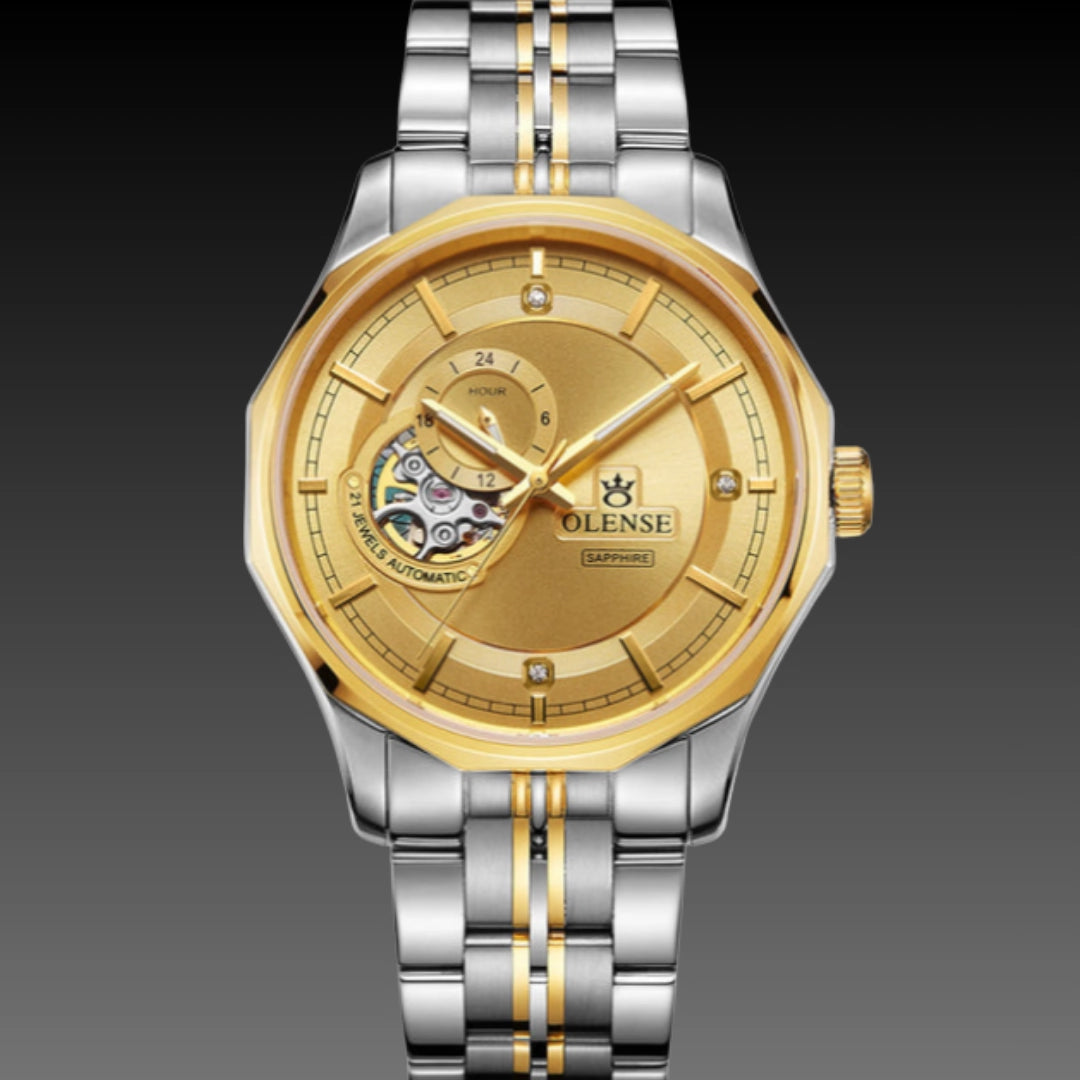
For example, the Men's Luxury Open Heart Automatic Watch features a leather strap with a stainless-steel butterfly deployment clasp.
The Men's Skeleton Automatic Watch also lists a stainless-steel butterfly deployant clasp in its specifications.
Before choosing a watch, review its current product details and strap specifications to make sure the design suits your preferences.
Frequently Asked Questions About Deployant Clasps
What is a deployant clasp on a watch?
A deployant clasp is a folding fastening mechanism that opens on hinges and closes to secure a watch strap or bracelet around the wrist. It is also commonly called a deployment clasp or folding clasp.
Is a deployant clasp the same as a deployment clasp?
The terms are commonly used interchangeably to describe folding watch clasps. The spelling varies between manufacturers and retailers, so both terms can be useful when researching a watch or replacement clasp.
What is the difference between a deployant clasp and a butterfly clasp?
A butterfly clasp is a type of deployant clasp that opens using two folding sections. A single-fold deployant generally opens through a more one-sided folding mechanism. The exact design varies by model.
Is a deployant clasp better for leather straps?
It can be beneficial because it reduces repeated bending and wear around a single buckle hole. However, the best option depends on strap compatibility, comfort, clasp design and personal preference.
How do you open a deployant clasp?
Identify the clasp's release mechanism, which may be a folding cover, lever or push buttons. Release it as instructed by the manufacturer, then unfold the hinged sections carefully. Do not force the clasp open.
How do you adjust a deployant clasp?
The method depends on its design. Some clasps allow the strap attachment to be moved between adjustment positions, while others require the strap to be resized. Check the manufacturer's instructions before moving spring bars or altering the strap.
Can you put a deployment clasp on any leather strap?
No. The clasp must be compatible with the strap's buckle-end width, thickness, attachment system and shape. Some straps are designed for particular clasp types and may not accept a universal replacement.
Does a deployant clasp make a watch more secure?
It can provide a secure fastening when correctly fitted and locked. However, security depends on the clasp's construction, condition and correct use. A deployant clasp should not be assumed safer than every pin buckle in every situation.
Is a deployant clasp suitable for small wrists?
It can be, but the folded mechanism may take up more space beneath the wrist. Check the clasp's dimensions, the strap length and where the clasp sits when closed to determine whether it will feel comfortable.
Final Thoughts
A deployant clasp is a practical alternative to a traditional pin buckle, using a folding mechanism to secure a watch around the wrist. Depending on its design, it can make daily fastening convenient, provide a refined appearance and reduce repeated wear around leather strap holes.
The best choice depends on your wrist, strap material, preferred style and the compatibility of the clasp with your watch. Before purchasing or fitting one, confirm the measurements, attachment system and manufacturer's instructions.
With the right fit and proper care, a deployant clasp can be a useful feature for everyday wear or a dress watch.
How to Adjust a Watch Band: Step-by-Step Guide
Swiss vs Japanese Watch Movements: Which Is Better?
Related Posts

What Is a Tourbillon Watch? How It Works & Why It Costs More
Swiss vs Japanese Watch Movements: Which Is Better?

How to Adjust a Watch Band: Step-by-Step Guide

5 ATM Water Resistance: What It Means for Your Watch

Which Wrist to Wear a Watch On? Left or Right?
How to Clean a Stainless Steel Watch Safely
