
5 ATM Water Resistance: What It Means for Your Watch
When shopping for a watch, you may notice a marking such as 5 ATM, 5 bar or 50 m water resistance on the dial, case back or product specifications. These terms describe how well a watch is designed to resist water pressure, but they do not always mean what buyers expect.
Does 5 ATM water resistance mean you can swim with your watch? Can you wear it in the shower? And does a 50-metre rating mean it is safe to take the watch 50 metres underwater?
The answers depend on the watch's construction, its manufacturer's instructions and the activity you have in mind.
In this guide, we'll explain what 5 ATM water resistance means, how it compares with other watch ratings, which activities may be suitable and how to protect your watch from water damage.
What Does 5 ATM Water Resistance Mean?
5 ATM water resistance means a watch is rated to withstand a pressure equivalent to five atmospheres under specified test conditions. ATM stands for atmosphere, a unit used to express pressure.
One atmosphere is approximately equal to the atmospheric pressure at sea level. Five atmospheres correspond to approximately 5 bar of pressure, which is commonly associated with a 50-metre water-depth equivalent.
This is why watches marked 5 ATM, 5 bar and 50 m are often grouped together in water-resistance guides.
However, these markings should not be interpreted as a promise that every watch can be safely worn at a depth of 50 metres. Water resistance is assessed under controlled conditions, and a watch's real-world performance depends on its design, seals, condition and intended use.
The international standard ISO 22810 specifies requirements and test methods for water-resistant watches. It also addresses the markings manufacturers can apply to their products.
You can learn more from the official ISO 22810 standard.
What Do 5 ATM, 5 Bar and 50 m Mean?
Although these markings are related, they describe pressure or its approximate water-depth equivalent rather than three different levels of protection.
- 5 ATM: A pressure rating of five atmospheres.
- 5 bar: A pressure measurement equivalent to approximately five atmospheres.
- 50 m: A commonly used depth-equivalent marking associated with this pressure rating.
For most buyers, the important question is not simply the number on the case. It is whether the watch manufacturer approves the watch for the intended activity.
Does 5 ATM Mean a Watch Can Go 50 Metres Underwater?
No. A 5 ATM water-resistant watch should not automatically be treated as suitable for use 50 metres underwater.
The 50-metre marking refers to a pressure rating under specified conditions. It does not guarantee that a watch can withstand every situation encountered at that depth.
Real-world water exposure can involve movement, sudden changes in pressure, temperature differences and wear to the seals. These factors can affect how well a watch resists water.
For example, jumping into a pool, moving your arms rapidly through water or taking part in a water sport can expose a watch to conditions that differ from a controlled pressure test.
This is why manufacturers publish activity-specific guidance rather than relying on the depth number alone.
Remember: A 5 ATM rating is a measure of water resistance, not a guarantee of safe operation at a literal depth of 50 metres.
Can You Swim With a 5 ATM Water-Resistant Watch?
Sometimes, yes. Some manufacturers approve their 5 ATM or 50 m watches for swimming, while others recommend more limited water exposure. Always check the instructions for your specific model before taking it into a pool or open water.
Here is a practical guide to common activities.
| Activity | Is a 5 ATM watch suitable? |
|---|---|
| Rain and accidental splashes | Generally suitable if the watch is in good condition |
| Handwashing | Usually suitable, following manufacturer guidance |
| Swimming in a pool | May be suitable if the manufacturer explicitly permits it |
| Swimming in the sea | Depends on the manufacturer's guidance and the watch's condition |
| Showering | Check the manual; hot water, soap and shampoo can create additional risks |
| Snorkelling | Do not assume it is suitable |
| Scuba diving | Not suitable unless the watch is specifically designed and rated for the activity |
These are general guidelines, not a substitute for the manufacturer's instructions.
For example, Casio's water-resistance guidance distinguishes between 50 m and 100 m ratings and advises users not to operate the crown or buttons while a watch is submerged, unless the model is specifically designed to allow it.
Is 5 ATM Suitable for Swimming?
A 5 ATM watch can be suitable for swimming if its manufacturer specifically approves that activity. However, this is not a universal rule for every watch carrying the same rating.
If you swim regularly, choose a model whose official specifications clearly state that it is suitable for swimming. If you plan to snorkel, dive or participate in high-impact water sports, look for a watch designed and rated for those activities.
When the manufacturer's guidance is unclear, the safer choice is to keep the watch out of the water.
Can You Wear a 5 ATM Watch in the Shower?
It is better not to assume that a 5 ATM watch is shower-safe.
Hot water, steam, soap and shampoo can affect seals and other watch components. Temperature changes may also contribute to condensation inside the case. Some manufacturers permit showering with particular models, while others advise against it.
For this reason, remove your watch before showering unless the manufacturer explicitly confirms that the model is suitable for that use.
3 ATM vs 5 ATM vs 10 ATM vs 20 ATM
Water-resistance ratings help you compare watches, but a higher number does not automatically tell you everything about their intended use.
The following chart provides a general overview. Always confirm the approved activities for the specific model.
| Rating | Approximate depth equivalent | General guidance |
|---|---|---|
| 3 ATM / 3 bar | 30 m | Everyday exposure and accidental splashes |
| 5 ATM / 5 bar | 50 m | Everyday use; swimming only when approved by the manufacturer |
| 10 ATM / 10 bar | 100 m | Often suitable for swimming and some surface-water activities, depending on manufacturer guidance |
| 20 ATM / 20 bar | 200 m | Better suited to demanding water activities; diving suitability still depends on the watch's design and rating |
The depth figures are pressure equivalents, not guarantees of safe use at those exact depths.
3 ATM Water Resistance
A watch rated at 3 ATM is generally intended for everyday wear and accidental splashes. It may handle rain or brief contact with water, but it should not be assumed suitable for swimming.
If you need a watch for regular pool use, check for a higher rating and explicit swimming approval.
5 ATM Water Resistance
A 5 ATM watch offers more water resistance than a 3 ATM model, making it a practical option for many everyday situations.
Depending on the manufacturer's guidance, it may also be suitable for swimming. It should not automatically be used for snorkelling, scuba diving or high-impact water sports.
10 ATM Water Resistance
A 10 ATM watch has a higher pressure rating and is often designed for more frequent water exposure, including swimming and certain surface-water activities.
However, the rating alone does not establish that a watch is suitable for scuba diving. Check its specifications and intended-use instructions.
20 ATM Water Resistance
A 20 ATM rating offers a higher level of pressure resistance and is found on watches intended for more demanding aquatic activities.
Even so, a 20 ATM marking alone does not make a watch a certified diving watch. If you need a watch for scuba diving, choose one specifically designed and rated for diving, and follow the manufacturer's depth and maintenance guidance.
Water Resistant vs Waterproof: What's the Difference?
The terms water resistant and waterproof are often used interchangeably in everyday shopping, but they should not be treated as identical guarantees.
Water resistant means a product is designed to resist water penetration to a specified degree under defined conditions. The level of protection depends on its rating and construction.
Waterproof suggests that water cannot enter under any circumstances. That is a much broader claim and can create unrealistic expectations when applied to watches.
A watch marked 5 ATM is not protected against every possible form of water exposure. Its resistance may be affected by ageing seals, impact damage, improper crown positioning or servicing that does not restore the original sealing performance.
When comparing watches, rely on the stated rating and the manufacturer's approved uses rather than a general waterproof label.
What Affects a Watch's Water Resistance?
Even a watch with a suitable rating needs proper care. Water resistance can deteriorate over time, especially when seals become worn or the case is damaged.
1. Worn or Damaged Seals
Gaskets help prevent water from entering through areas such as the case back, crown and crystal. With age and use, these seals can deteriorate.
If your watch has been worn for years or has suffered an impact, consider having its water resistance checked before exposing it to water.
2. An Unsecured Crown
A screw-down crown, when fitted, must be secured according to the manufacturer's instructions. On other watches, the crown should be fully returned to its normal operating position.
Never adjust the crown or press buttons while the watch is wet or underwater unless the model's instructions explicitly permit it.
3. Heat and Sudden Temperature Changes
Hot showers, saunas and steam rooms can create conditions that a watch's water-resistance rating was not designed to cover.
Sudden temperature changes can also contribute to condensation. Avoid exposing your watch to unnecessary heat and follow the manufacturer's care instructions.
4. Soap, Saltwater and Chemicals
Soap, shampoo, cleaning products and saltwater can affect watch materials and seals. Their impact varies by model and exposure.
If the manufacturer permits swimming in saltwater, rinse the watch with fresh water afterwards where instructed, then dry it with a soft cloth. Check that the strap material is also suitable for water exposure.
5. Poor Maintenance
Water resistance is not necessarily permanent. Regular wear, impacts and previous repairs can affect a watch's ability to keep water out.
If you notice moisture beneath the crystal, stop using the watch and arrange a professional inspection promptly. Do not assume the moisture will disappear without causing damage.
How to Choose the Right Water-Resistance Rating
The best rating depends on how you intend to wear your watch.
- For everyday wear: A lower rating may be enough if you only expect occasional splashes, but check the manufacturer's limitations.
- For regular swimming: Choose a watch explicitly approved for swimming. A 5 ATM model may be suitable, but a 10 ATM model can provide a more conservative option when its intended use is appropriate.
- For snorkelling or water sports: Check the specific activity guidance and choose a model designed to handle the conditions involved.
- For scuba diving: Look for a watch specifically designed and rated for diving. Do not rely on the ATM number alone.
If you are comparing styles for everyday wear, explore the GiftLuxWatch men's watch collection and check each product's specifications before choosing a model for water exposure.
How to Care for a 5 ATM Watch
A few simple habits can help preserve your watch and reduce the risk of water damage.
- Check the manufacturer's water-resistance instructions before swimming or showering.
- Make sure the crown is in its correct position before any permitted water exposure.
- Avoid pressing buttons or adjusting the crown underwater unless the watch is designed for it.
- Keep the watch away from hot showers, saunas and sudden temperature changes unless explicitly approved.
- Follow the manufacturer's instructions for rinsing and drying the watch after water exposure.
- Have the watch inspected if it has been dropped, damaged or opened for repair.
- Arrange a water-resistance test when recommended, particularly if you regularly expose the watch to water.
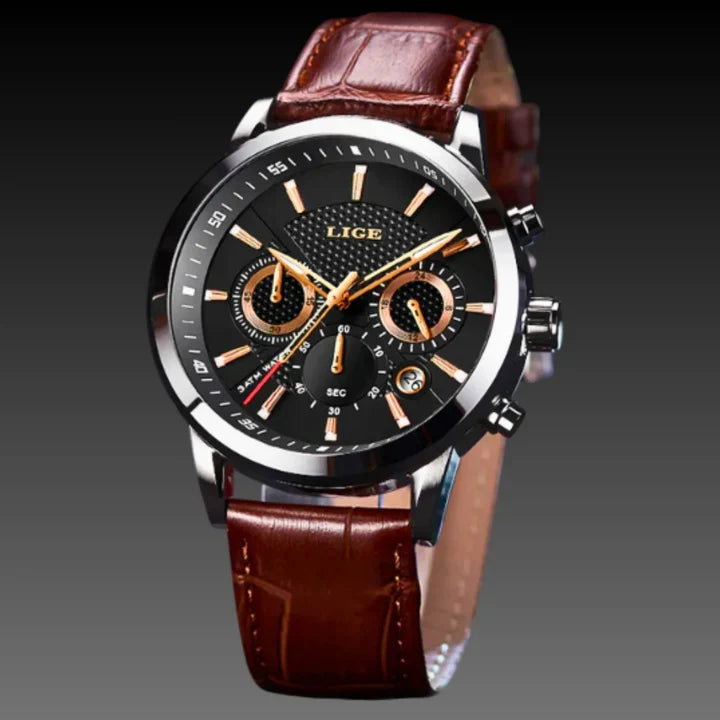
Leather straps require particular care because water can stain, weaken or damage the material. A water-resistant case does not automatically mean the strap is suitable for swimming.
Frequently Asked Questions About 5 ATM Water Resistance
What does 5 ATM mean on a watch?
5 ATM means the watch is rated to withstand pressure equivalent to five atmospheres under specified test conditions. It is commonly associated with a 50-metre water-depth equivalent, but it does not guarantee safe use at a depth of 50 metres.
How deep is 5 ATM water resistance?
The marking is associated with a pressure equivalent of approximately 50 metres of water. This is a test-pressure reference, not a guarantee that the watch can be taken to that actual depth.
Is 5 ATM the same as 50 m water resistance?
These markings are commonly used to express the same general pressure rating. However, the activities permitted for an individual watch depend on the manufacturer's specifications and instructions.
Can you swim with a 50-metre water-resistant watch?
Some 50 m watches are approved for swimming, while others have more limited recommendations. Check the official instructions for the exact model before using it in a pool or the sea.
Is 5 ATM waterproof?
No watch should be assumed completely waterproof in every situation. A 5 ATM watch is water resistant to a specified rating under defined conditions, and its protection can change with wear, damage and maintenance.
Is 5 ATM better than 3 ATM?
A 5 ATM rating indicates greater pressure resistance than 3 ATM under the relevant test conditions. It may be a better choice for people who expect more frequent water exposure, but swimming suitability must still be confirmed.
Is 10 ATM better than 5 ATM?
A 10 ATM watch has a higher pressure rating than a 5 ATM watch. It may be suitable for a wider range of water activities, depending on its design and the manufacturer's instructions. A higher rating alone does not guarantee suitability for scuba diving.
Can a 5 ATM watch be worn in the rain?
Generally, yes, provided the watch is in good condition and the manufacturer permits ordinary exposure to rain. Ensure that the crown and any seals are in their correct condition.
Does a watch's water resistance last forever?
No. Seals can deteriorate over time, and impacts or repairs can affect the watch's protection. Follow the manufacturer's maintenance recommendations and have the watch inspected if you suspect damage.
Final Thoughts
5 ATM water resistance is a useful rating for understanding how a watch handles pressure, but it is not a universal promise of swimming or diving capability. The 50 m marking represents a pressure equivalent under specified conditions, not a guaranteed operating depth.
Before buying or wearing a water-resistant watch, consider your daily routine, the activities you plan to do and the manufacturer's instructions for that particular model. With the right choice and proper care, you can enjoy your watch while reducing the risk of avoidable water damage.
Which Wrist to Wear a Watch On? Left or Right?
How to Adjust a Watch Band: Step-by-Step Guide
Related Posts

Do Automatic Watches Have Batteries? Here's How They Work

What Is a Tourbillon Watch? How It Works & Why It Costs More
Swiss vs Japanese Watch Movements: Which Is Better?

Deployant Clasp: What It Is and How It Works

How to Adjust a Watch Band: Step-by-Step Guide

Which Wrist to Wear a Watch On? Left or Right?