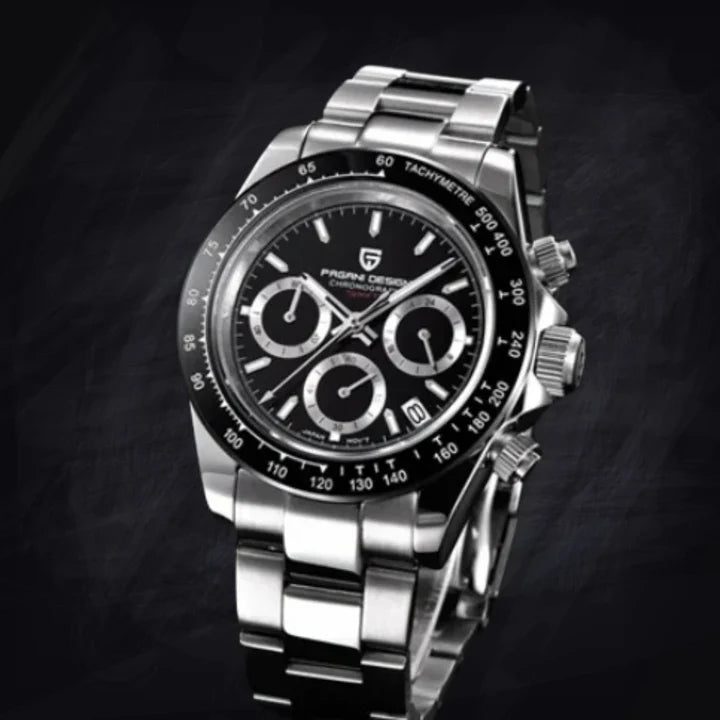

How Long Do Automatic Watches Last? Lifespan Guide
An automatic watch can last for decades when it is made well, used appropriately and maintained regularly. Unlike a watch with a disposable battery-powered movement, an automatic watch relies on a system of mechanical components that can often be cleaned, repaired and replaced.
However, there is no single lifespan that applies to every automatic watch. The quality of the movement, frequency of use, exposure to shocks and moisture, servicing history and availability of replacement parts all affect how long it remains reliable.
If you are wondering how long automatic watches last, the most important distinction is between the watch's overall lifespan and its power reserve. One describes how many years the watch can remain usable; the other describes how long it runs after its stored energy is no longer replenished.
This guide explains both, along with the factors that affect longevity, recommended maintenance and signs that your watch may need attention.
How Long Do Automatic Watches Last?
A well-maintained automatic watch can last for decades and, in some cases, a lifetime. Mechanical watches do not have a single fixed expiration date because worn components can often be serviced or replaced.
That does not mean every automatic watch will last forever. Lower-quality components, poor maintenance, accidental damage and expensive or unavailable replacement parts can limit a watch's practical lifespan.
The watch's condition matters more than its age alone. An older watch that has been properly serviced may continue working reliably, while a relatively new watch can develop problems if it is exposed to moisture, significant impacts or neglected maintenance.
When assessing the expected lifespan of an automatic watch, consider three things:
- Movement quality: The design, materials and manufacturing quality affect reliability and repairability.
- Maintenance history: Cleaning, lubrication and replacement of worn components help keep the movement functioning.
- Parts availability: A watch may be repairable in principle, but restoration can become difficult if suitable parts or specialist expertise are unavailable.
A realistic answer is that a good automatic watch can provide many years of use, but its long-term performance depends on how it is made and cared for.
What Is the Difference Between Lifespan and Power Reserve?
These two terms are often confused, but they describe different things.
Lifespan refers to the total period during which a watch remains usable, including after repairs and servicing.
Power reserve is the amount of time an automatic watch continues running after its mainspring has been sufficiently wound and the watch is no longer receiving energy from wrist movement.
Many traditional automatic movements have a power reserve of approximately 36–48 hours, although some models offer considerably more. The exact figure depends on the movement and should be checked in the manufacturer's specifications.
For example, an automatic watch with a 40-hour power reserve may stop after being left unworn for longer than that period. This is not evidence that the watch has reached the end of its lifespan. It usually means the stored energy has run out.
You can wind a compatible movement again, set the time and resume wearing it.
Understanding this difference makes it easier to judge whether a stopped watch simply needs winding or may have a mechanical problem.
What Factors Affect the Lifespan of an Automatic Watch?
1. Movement Quality and Construction
The movement is the mechanism that keeps an automatic watch running. Its components include the mainspring, gears, rotor, escapement and balance assembly.
Manufacturing quality, materials, design and assembly all influence reliability. A movement with readily available replacement parts may also be easier and more economical to maintain over the long term.
Price alone does not guarantee longevity. A more expensive watch may have additional complications or a more elaborate finish, but those features do not automatically make it more durable. The specific movement, construction and service requirements are more useful indicators.
2. Regular Servicing
An automatic movement contains many moving parts that operate continuously while the watch is running. Lubricants help reduce friction, while components can gradually wear with use.
Over time, lubrication may deteriorate and worn parts may need attention. A professional service can include inspecting the movement, cleaning and lubricating components, replacing defective parts and checking performance.
Service intervals vary by brand and movement. Some watchmakers recommend inspections or overhauls every few years, while other manufacturers specify longer intervals. Follow the recommendations for your particular watch rather than treating a single interval as universal.
If the watch begins losing time significantly, stops unexpectedly, develops unusual noises or shows signs of moisture inside the case, seek professional advice rather than waiting for a scheduled service.
3. Everyday Wear and Accidental Damage
Normal wear does not automatically shorten a watch's lifespan dramatically. However, hard impacts, repeated strong vibrations and careless handling can damage delicate components.
Remove your watch when an activity exposes it to impacts beyond its intended use. For example, a dress watch is not necessarily designed for the same conditions as a watch built for sports or diving.
Also consider the case, crystal, bracelet and crown. These external parts can become scratched or damaged even when the movement remains functional.
4. Water and Moisture Exposure
Water resistance is not a permanent guarantee. Seals can age, and a watch that was water-resistant when new may need maintenance to retain that protection.
Follow the stated water-resistance rating and the manufacturer's instructions. Avoid operating the crown underwater unless the watch is specifically designed for it, and ensure a screw-down crown is secured correctly before exposure to water.
If condensation appears beneath the crystal, arrange an inspection promptly. Moisture inside the case can lead to corrosion and further movement damage if it is left untreated.
5. Storage and Environmental Conditions
When you are not wearing an automatic watch, store it in a clean, dry place away from direct sunlight, extreme temperatures, strong magnetic fields and avoidable shocks.
A stopped automatic watch does not normally need to be kept running continuously simply to preserve its lifespan. If you leave it unworn, its power reserve will eventually run out. You can wind and set it again when you want to use it, provided the movement is functioning normally.
A watch box can protect the case from scratches and help keep dust away. A watch winder is optional for most owners; it is mainly useful when you want to keep a compatible watch running and avoid resetting its time or complications.
How Often Should an Automatic Watch Be Serviced?
There is no universal service interval for every automatic watch. Manufacturer recommendations differ according to the movement, construction, intended use and service policy.
Some mechanical watches may require attention around every three to five years, while other manufacturers recommend longer intervals, such as six to ten years for certain models. These are examples of differing guidance, not interchangeable rules.
For the most reliable recommendation:
- Check the user manual or the manufacturer's official service guidance.
- Consider how often you wear the watch and the conditions in which you use it.
- Arrange an inspection if its timekeeping changes noticeably or it begins stopping unexpectedly.
- Use a qualified watchmaker or an authorized service centre when appropriate, especially if the watch is under warranty.
Servicing is not just about keeping the watch running. It can also help identify worn components before they cause additional damage.
Do Automatic Watches Last Longer Than Quartz Watches?
Not necessarily. Both types can provide years of use, but their mechanisms and maintenance requirements differ.
| Feature | Automatic watch | Quartz watch |
|---|---|---|
| Power source | Mainspring wound by wrist movement or, on compatible models, the crown | Battery or another electrical energy source |
| Main mechanism | Mechanical gears, escapement and balance assembly | Electronic circuit and quartz oscillator |
| Routine maintenance | Mechanical movement service when required | Battery or power-source maintenance where applicable, plus general inspection |
| Long-term repair | Often repairable if parts and expertise are available | Depends on movement design, parts availability and repair cost |
| Overall lifespan | Can last for decades with suitable care | Can also last many years; lifespan depends on construction and maintenance |
An automatic watch may appeal to someone who enjoys mechanical engineering and wants a movement that can be maintained over time. A quartz watch may suit someone who prioritizes convenience and typically lower maintenance requirements.
Neither type is guaranteed to outlast the other in every situation. Build quality, use, repairs and parts availability matter more than the movement category alone.
How Long Do Automatic Watches Last Without Wearing?
This question usually refers to power reserve rather than total lifespan.
A fully wound automatic watch may continue running for around 36–48 hours after you remove it, depending on the movement. Some models have a longer reserve, so check the official specifications for your watch.
When the power reserve runs out, the watch stops. This is normally expected behaviour rather than a sign of damage.
To start it again, use the crown if the movement supports manual winding. Follow the manufacturer's instructions, set the time and date, and secure the crown before wearing it.
You do not need to wear an automatic watch every day solely to protect its lifespan. If you wear it occasionally, simply expect to wind or reset it when you return to it.
Do Automatic Watches Break If You Do Not Wear Them?
An automatic watch does not normally break simply because it is left unworn and stops. Once its stored energy runs out, the movement stops operating until it receives energy again.
For ordinary storage, keep the watch away from moisture, extreme temperatures, strong magnetic fields and accidental impacts. There is generally no need to buy a watch winder just because you do not wear the watch every day.
Long periods of storage can still make a service or inspection appropriate, particularly for an older watch or one with an unknown maintenance history. If it does not restart correctly after being wound according to the manual, a watchmaker can check for faults.
Signs Your Automatic Watch May Need Servicing
A watch does not have to stop completely before it needs professional attention. Look for changes from its usual performance, including:
- Unusual timekeeping: It starts gaining or losing substantially more time than normal.
- Repeated stopping: It stops even after being properly wound and worn as recommended.
- Reduced power reserve: It runs for noticeably less time than its expected reserve under comparable conditions.
- Unusual sounds: You hear new grinding, rattling or other sounds that were not present before.
- Moisture beneath the crystal: Condensation or visible water may indicate a seal or case problem.
- Crown problems: The crown becomes difficult to operate, catches or no longer secures correctly.
These symptoms do not all indicate the same fault. For example, reduced running time may reflect insufficient winding, a change in wearing habits or a movement issue. A qualified watchmaker can assess the cause rather than replacing parts unnecessarily.
How to Make an Automatic Watch Last Longer
A few sensible habits can help preserve your watch.
Follow the Manufacturer's Instructions
Use the recommended winding, time-setting and date-setting procedure for your movement. Avoid forcing the crown or experimenting with settings when you are unsure how they work.
Keep the Watch Clean and Dry
Wipe the case and bracelet with a suitable soft cloth. Follow the manufacturer's cleaning guidance, particularly if the watch has leather straps or a finish that could be damaged by moisture or cleaning products.
Avoid Strong Impacts and Magnetic Fields
Protect the watch from avoidable knocks and strong magnetic sources. Magnetism can affect the timekeeping of some mechanical movements, while impacts can damage delicate components.
Keep Up With Appropriate Maintenance
Follow the recommended service schedule and investigate unusual performance early. Timely maintenance can help prevent additional wear, although it cannot guarantee that repairs will never be needed.
Store It Properly When Not in Use
Keep the watch in a dry, secure location. If you own several watches, store them so that their cases and crystals do not rub against one another.
Is an Automatic Watch Worth Buying for Long-Term Use?
An automatic watch can be a good long-term purchase if you appreciate mechanical movements and are comfortable with their maintenance requirements.
Before buying, consider the movement's reputation, the availability of service, the cost of replacement parts, the case and crystal materials, and the manufacturer's warranty. Also check the actual water-resistance rating rather than assuming every watch is suitable for swimming or everyday water exposure.
For a watch you plan to keep for many years, reliable servicing and parts availability can be just as important as its appearance.
You can explore our men's watch collection when comparing styles. Check each product's specifications carefully to confirm its movement type, materials and water resistance before making a decision.
Frequently Asked Questions
How long can an automatic watch last?
A well-maintained automatic watch can last for decades and potentially a lifetime. Its practical lifespan depends on movement quality, servicing, use, damage and the availability of replacement parts.
How long does an automatic watch last on a full wind?
That depends on its power reserve. Many traditional automatic movements run for approximately 36–48 hours when fully wound, while some models offer longer reserves. Check the specifications for the exact movement.
Do automatic watches last forever?
Not literally without maintenance. Many mechanical components can be repaired or replaced, allowing a watch to remain usable for a very long time. However, restoration may become impractical if parts are unavailable or repair costs exceed the watch's value.
How often should I service an automatic watch?
Follow the manufacturer's recommendation. Service guidance varies, with some recommendations around three to five years and others extending to six to ten years for particular models. Changes in performance may justify an earlier inspection.
Is it bad to let an automatic watch stop?
Not usually. If an automatic watch is left unworn longer than its power reserve, it will stop because its stored energy has run out. You can normally restart a functioning movement according to its manual.
Can an automatic watch last 100 years?
It is possible for a mechanical watch to remain functional for a century when it has been maintained and restored appropriately. That does not mean every modern automatic watch will reach that age; its construction, condition, repairability and parts availability all matter.
What shortens the lifespan of an automatic watch?
Poor maintenance, severe impacts, moisture entering the case, unsuitable environmental exposure and unavailable replacement parts can all affect longevity. Following the manufacturer's instructions and addressing problems early can help protect the movement.
Final Thoughts
Automatic watches can last for decades, but their longevity depends on more than the movement type alone. Construction quality, careful use, servicing and access to replacement parts all influence how long a watch remains reliable.
Remember that power reserve and overall lifespan are different measurements. A watch stopping after a day or two off your wrist may simply need winding, while repeated stopping or unusual timekeeping can indicate a need for inspection.
With realistic expectations and appropriate care, an automatic watch can remain a useful and enjoyable timepiece for many years.
How to Wind an Automatic Watch: A Step-by-Step Guide
How to Clean a Stainless Steel Watch Safely
Related Posts

What Is a Tourbillon Watch? How It Works & Why It Costs More
Swiss vs Japanese Watch Movements: Which Is Better?

Deployant Clasp: What It Is and How It Works

How to Adjust a Watch Band: Step-by-Step Guide

5 ATM Water Resistance: What It Means for Your Watch

Which Wrist to Wear a Watch On? Left or Right?